
Bell’s Theorem & Quantum Entanglement — Pedagogical Gallery
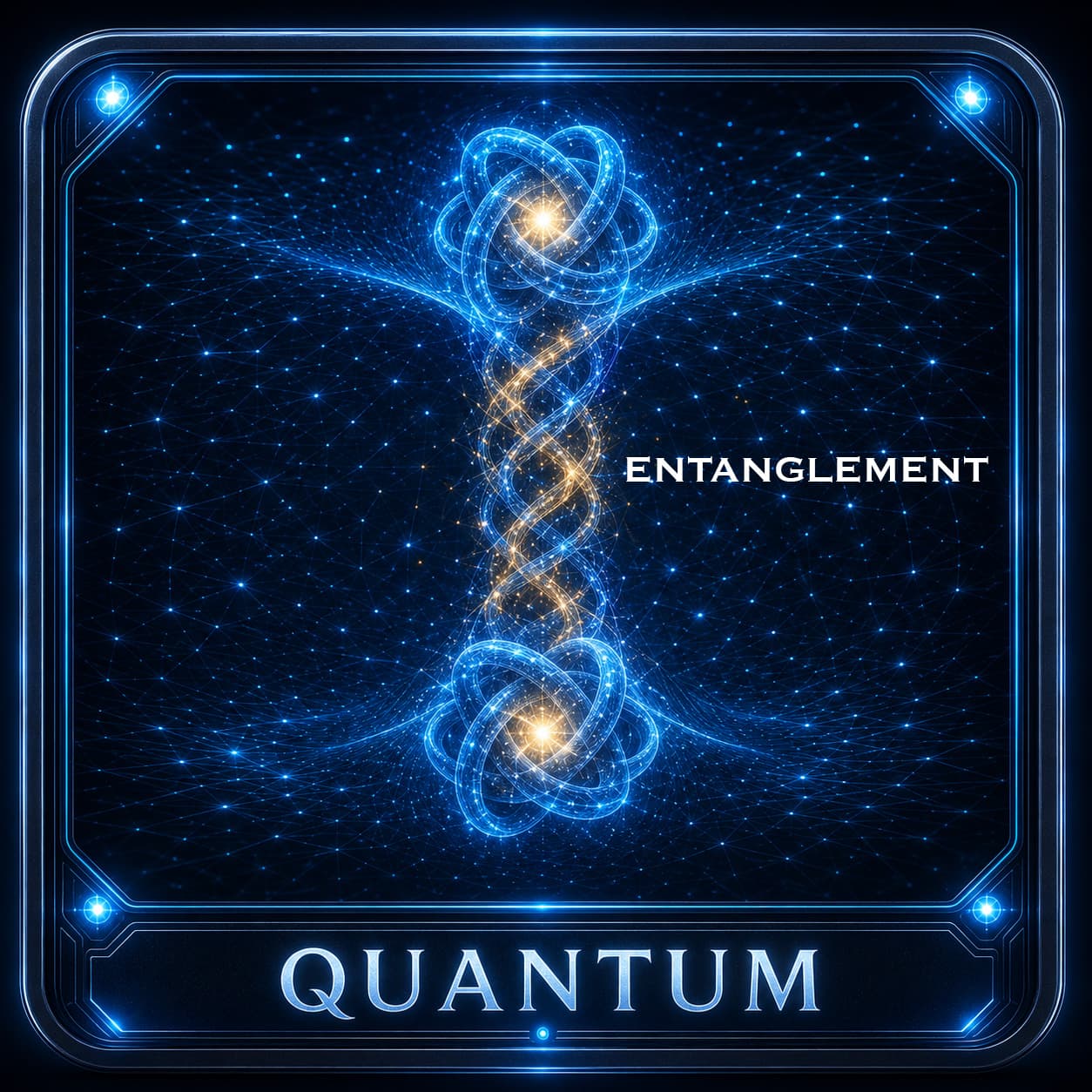
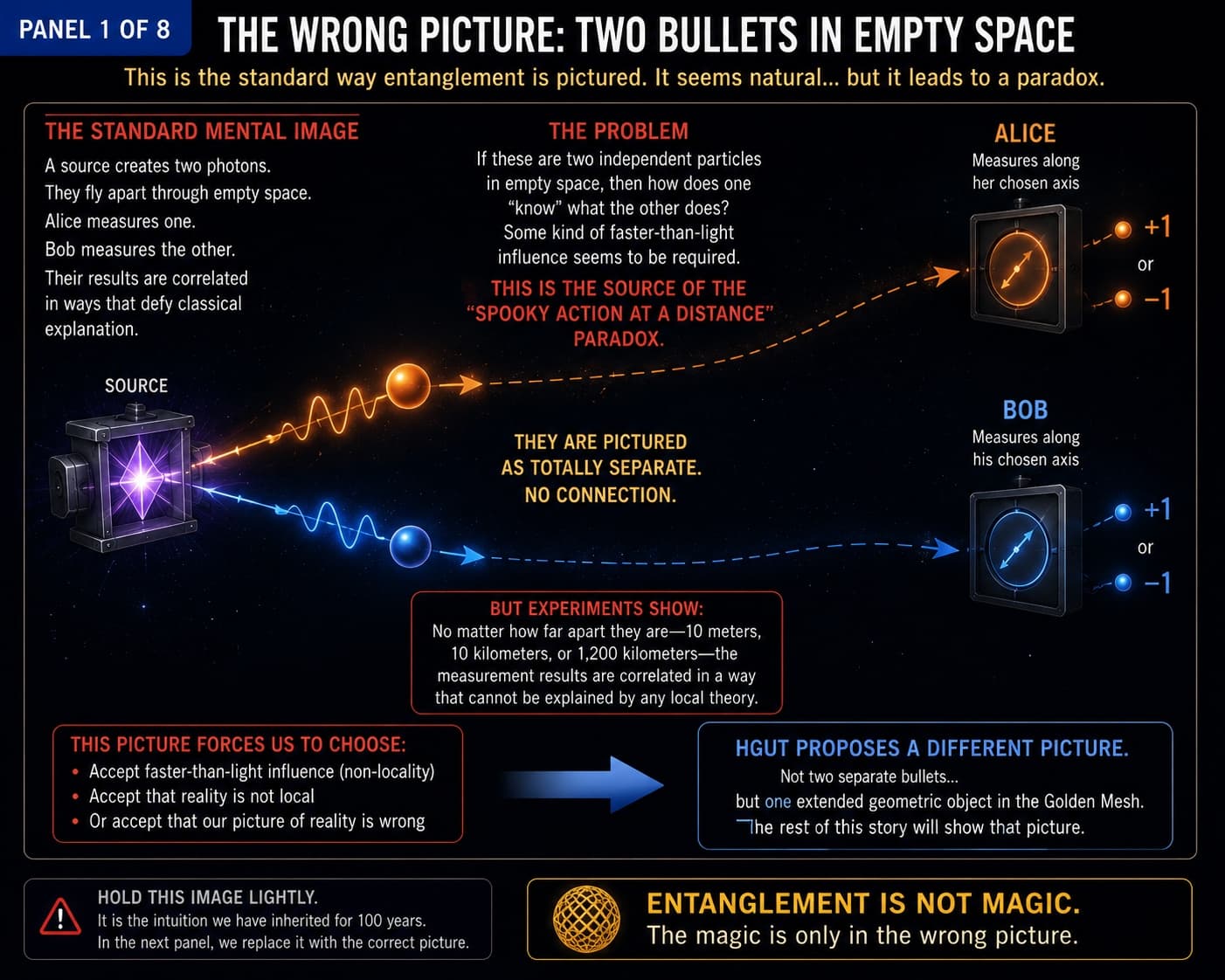
An accessible fifteen-image visual sequence presenting the HGUT corridor interpretation of Bell correlations, pair formation, measurement, and topological fracture.
A VISUAL ENCYCLOPEDIA
A visual encyclopedia of the Harrison Grand Unified Theory.
Explore the structure of reality.
Browse the Atlas
Browse complete galleries by topic, search for a concept, and move directly between visual explanations and their related Solution articles.

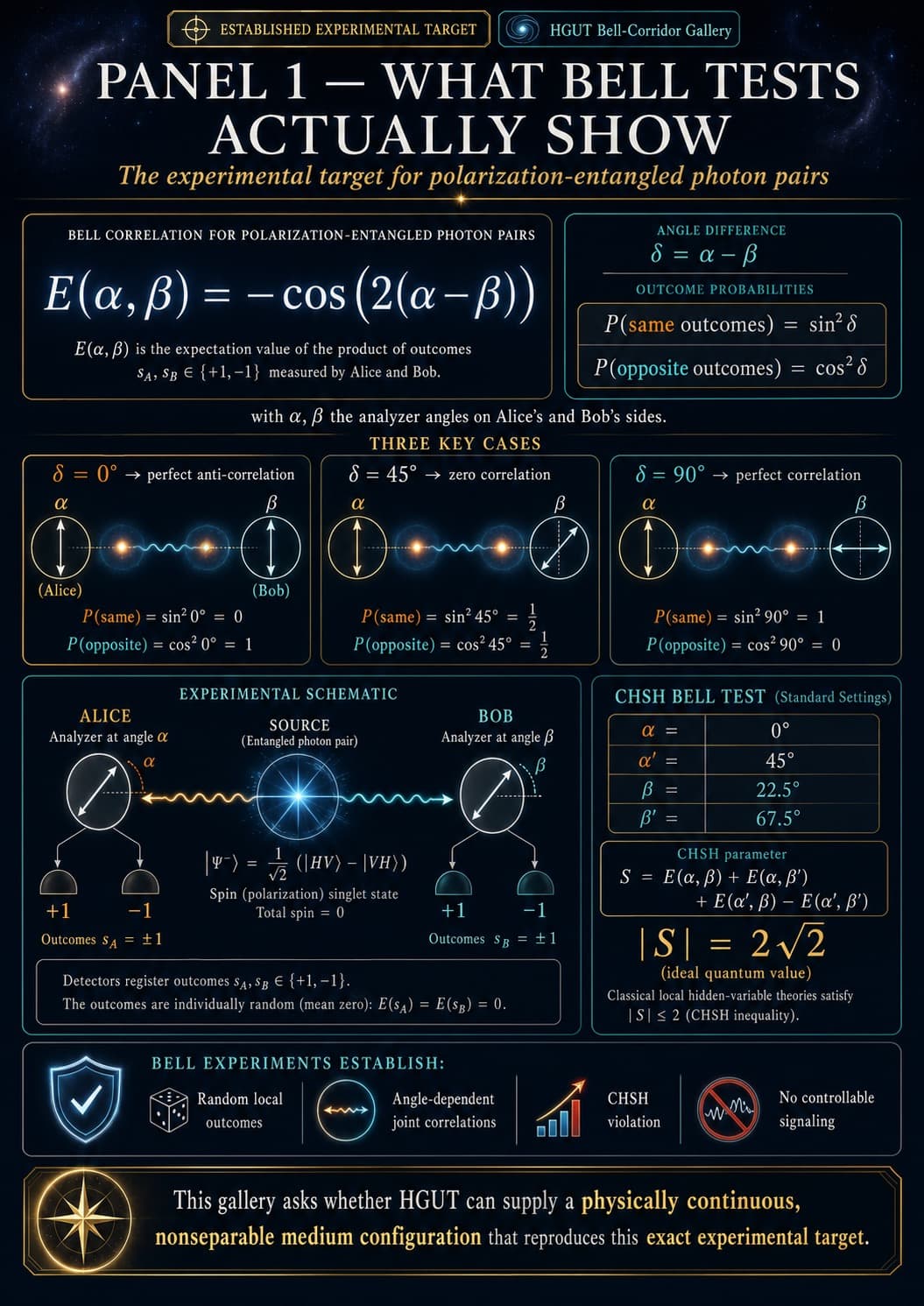
An accessible fifteen-image visual sequence presenting the HGUT corridor interpretation of Bell correlations, pair formation, measurement, and topological fracture.
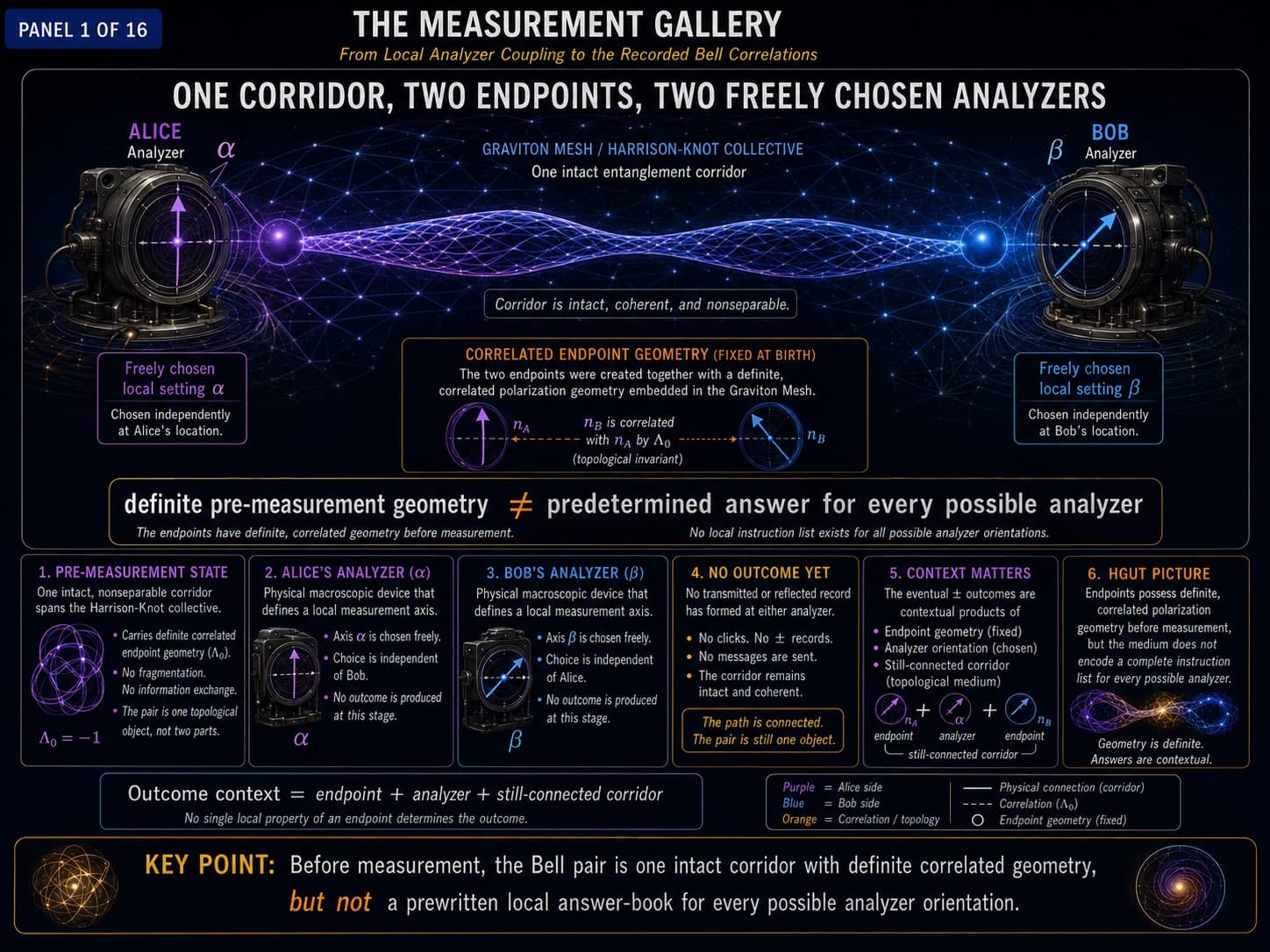
A sixteen-panel technical gallery examining the shared pre-measurement corridor, pair preparation, nonseparable structure, analyzer settings, and the physical configuration that exists before either outcome is recorded.

A sixteen-panel technical gallery examining analyzer interaction, joint boundary conditions, outcome selection, corridor fracture, causal relaxation, recorded results, and the no-signaling structure after measurement.

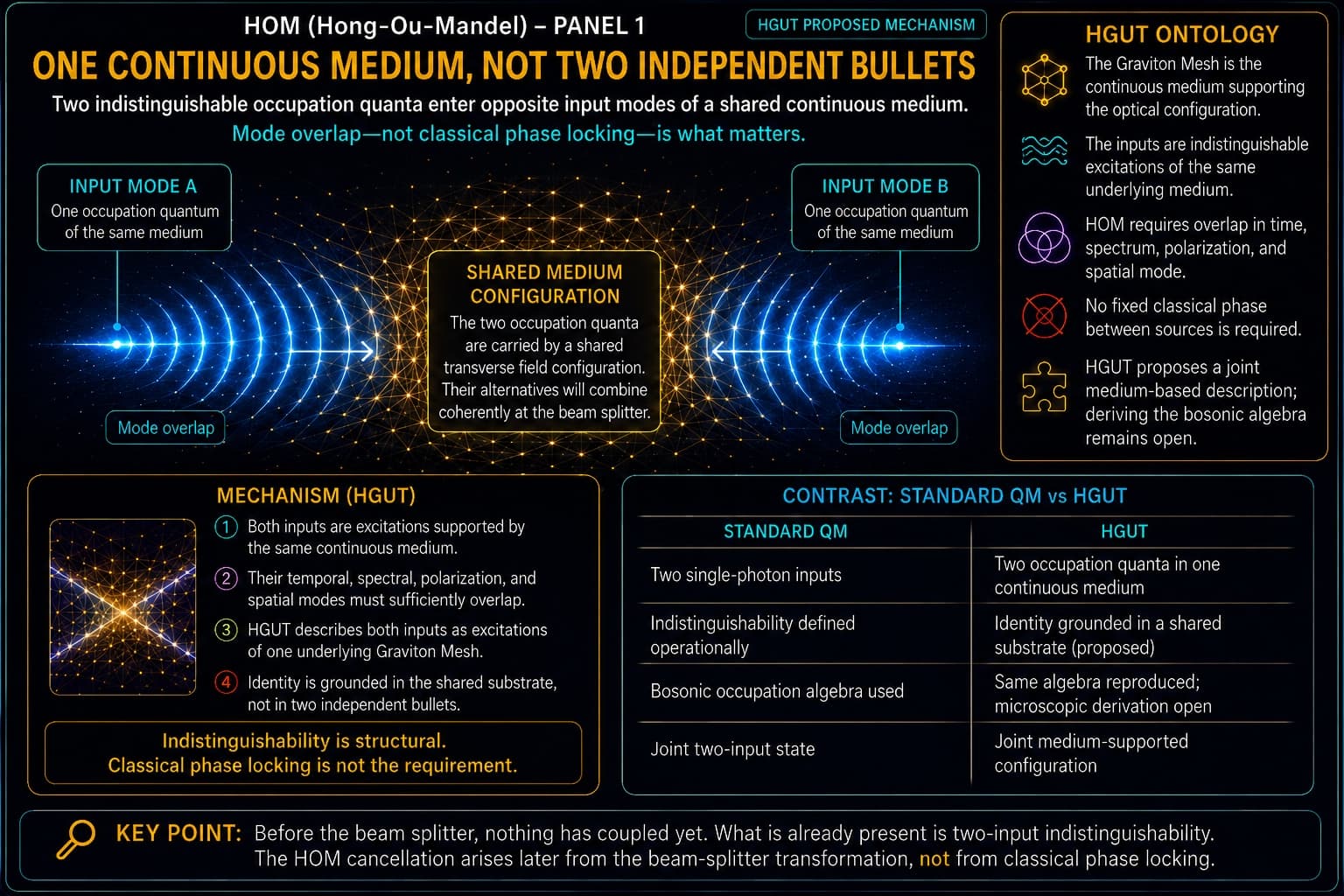
A six-panel visual explanation of mode coupling, symmetric and antisymmetric output channels, destructive interference, and coincidence suppression.

A six-panel visual sequence exploring barrier penetration as continuous medium behavior rather than a particle appearing discontinuously on the far side.

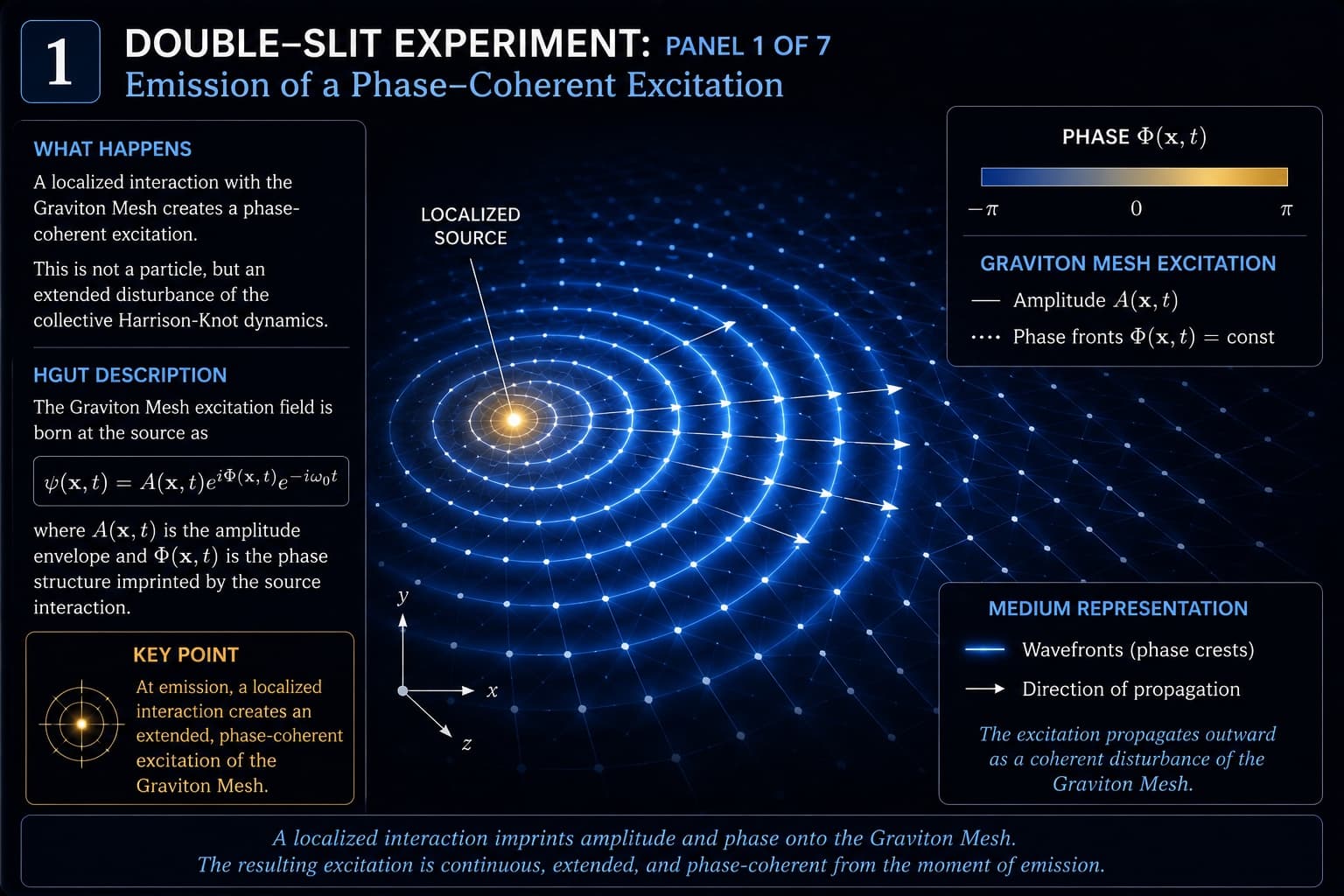
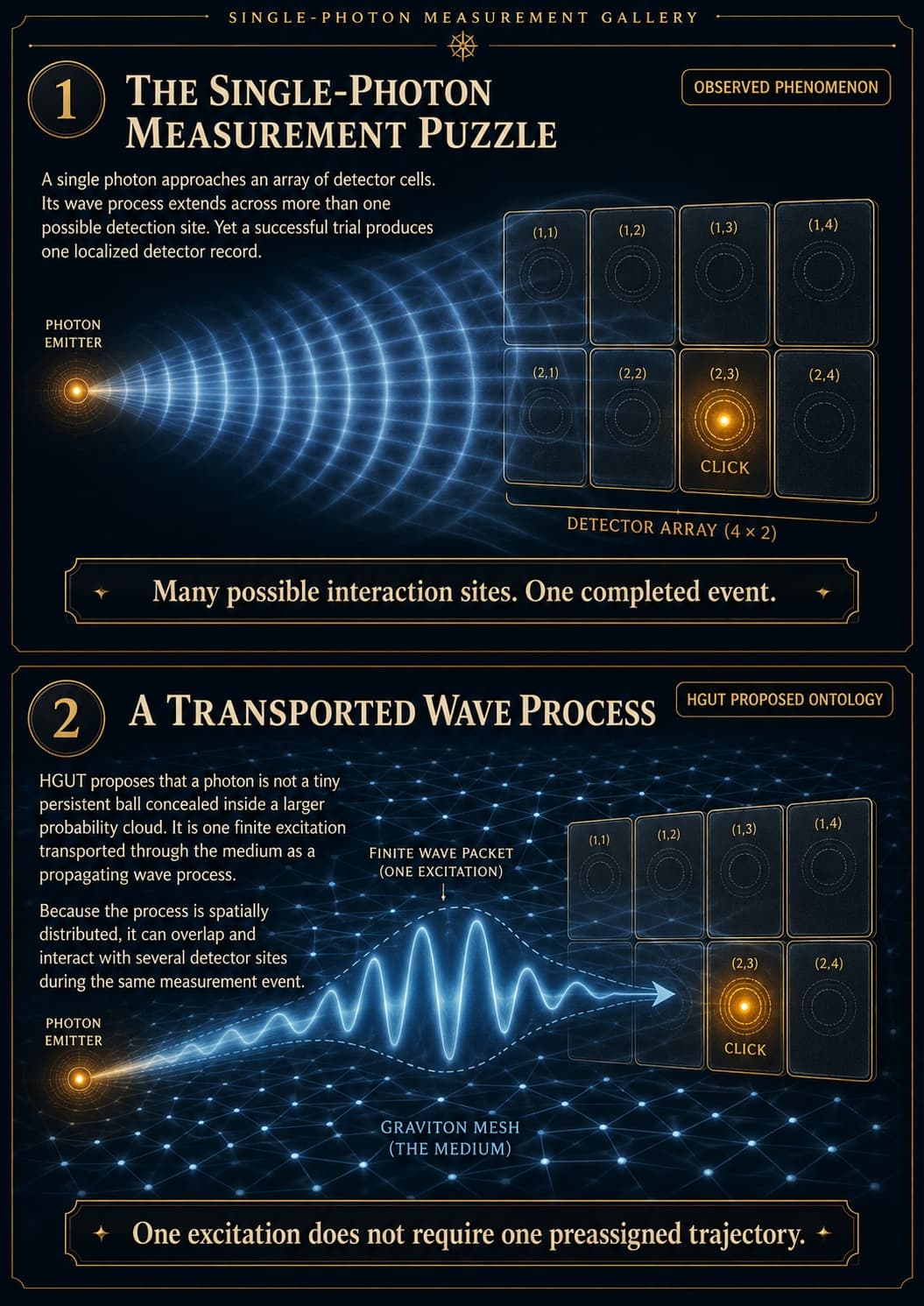
A seven-panel visual account of distributed propagation, interference structure, detector interaction, and the emergence of localized outcomes.

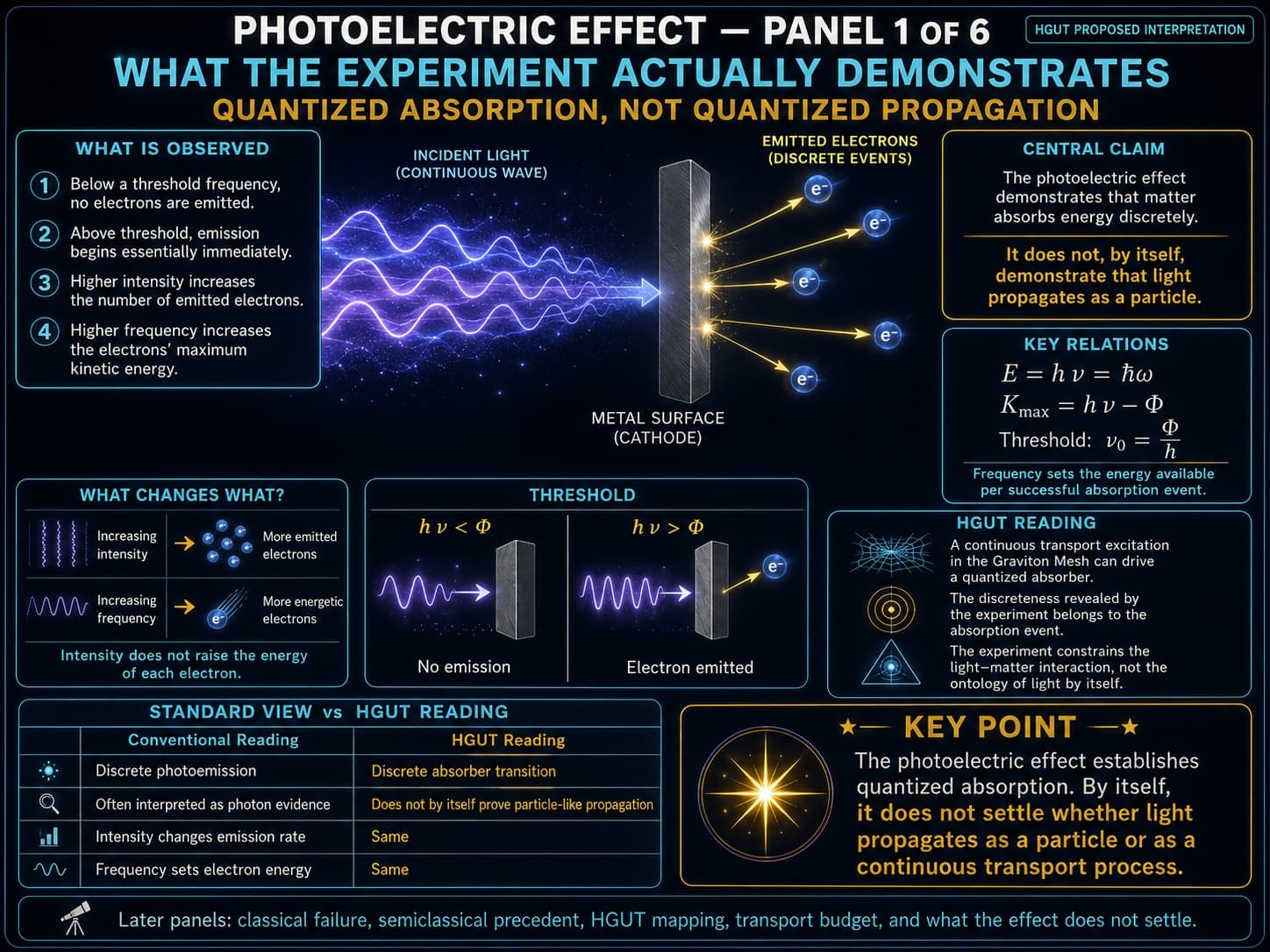
A six-panel visual explanation of transported energy, threshold interaction, local capture, and electron release.

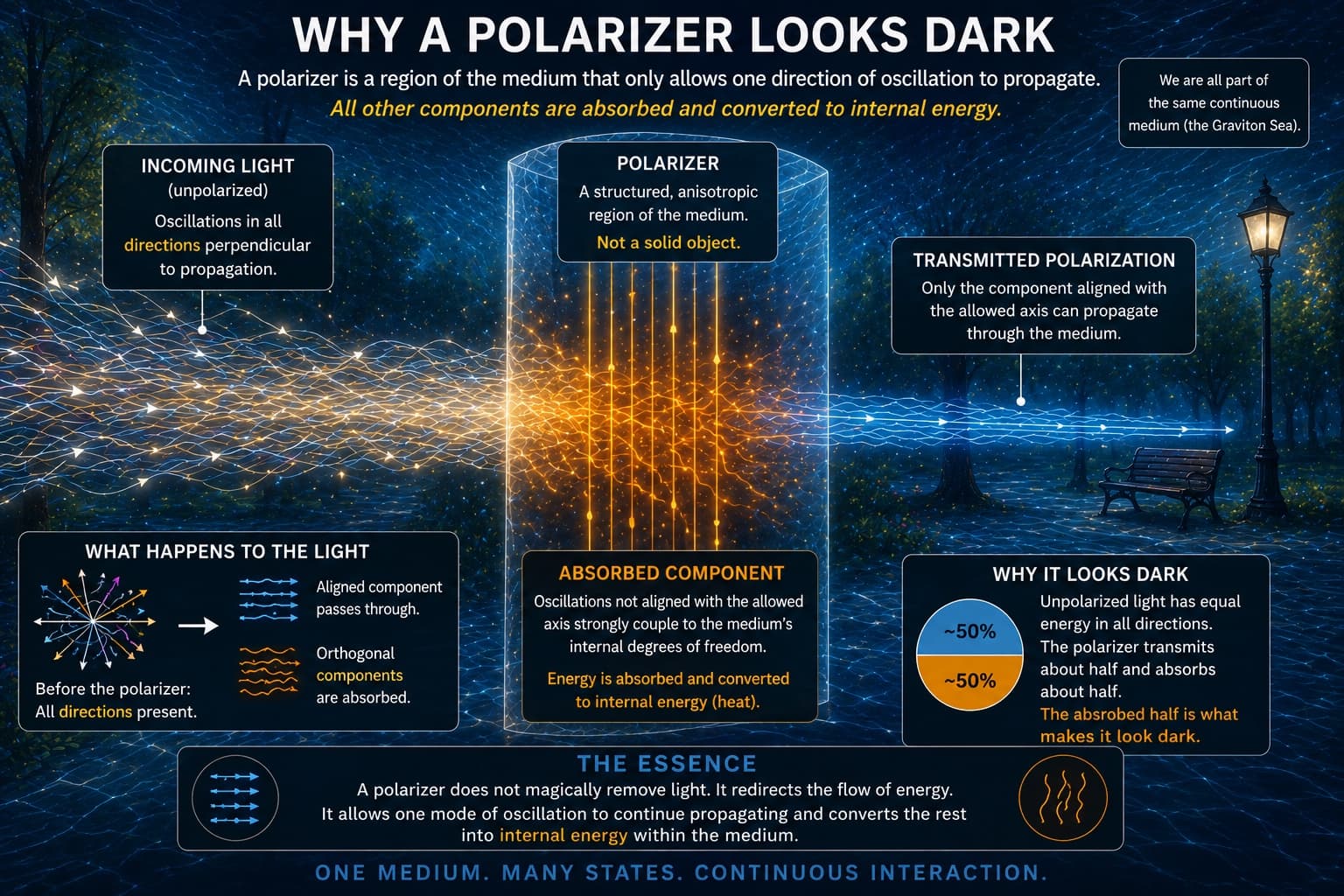
A five-panel visual explanation of polarization filtering, analyzer orientation, measurement outcomes, and the HGUT interpretation of the polarizer experiment.

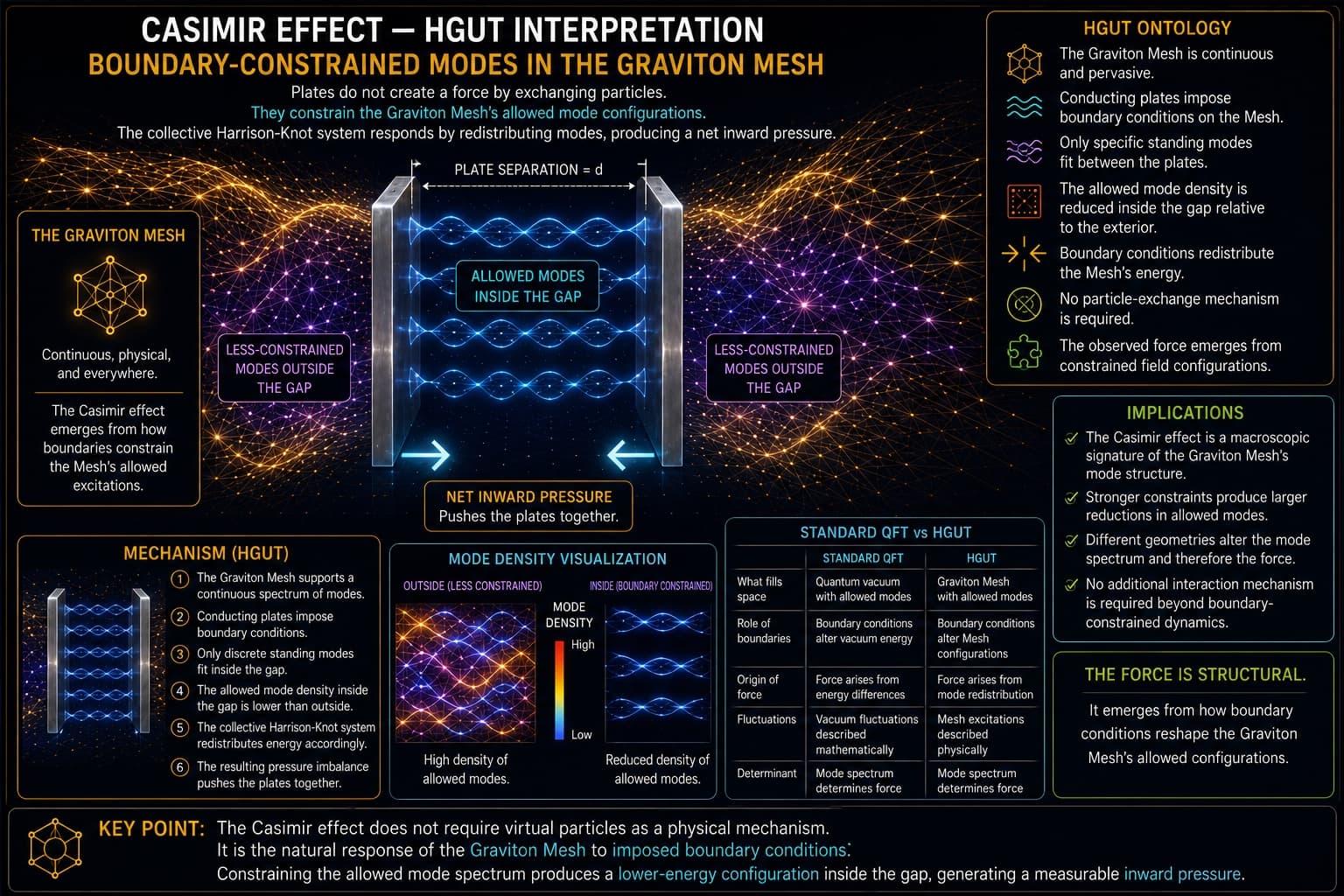
A visual introduction to the HGUT interpretation of boundary-constrained modes and the resulting measurable force.

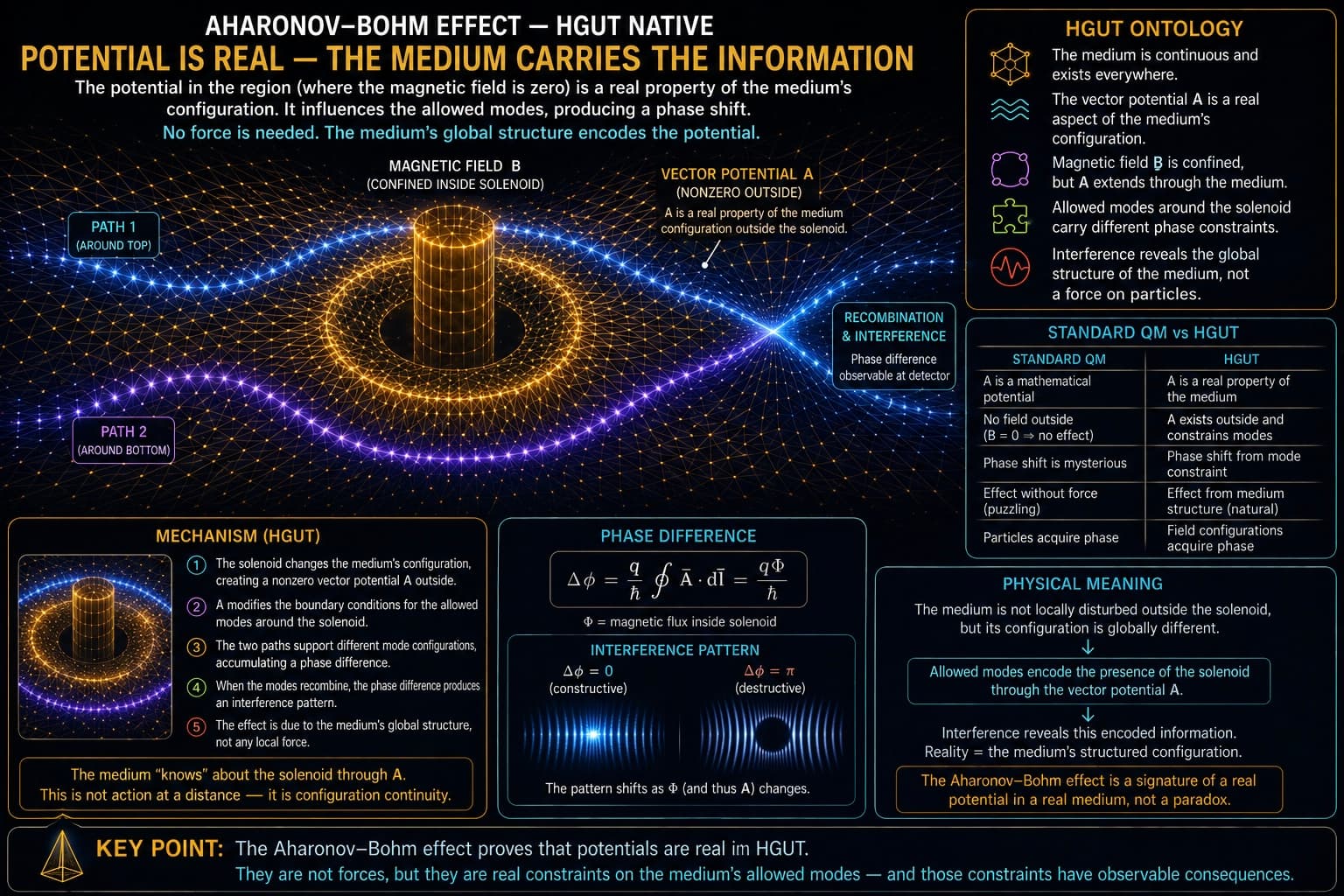
A visual introduction to phase organization, enclosed flux, and the physical source of the Aharonov–Bohm effect.

A visual explanation of how distributed photon exposure produces one localized detector record.

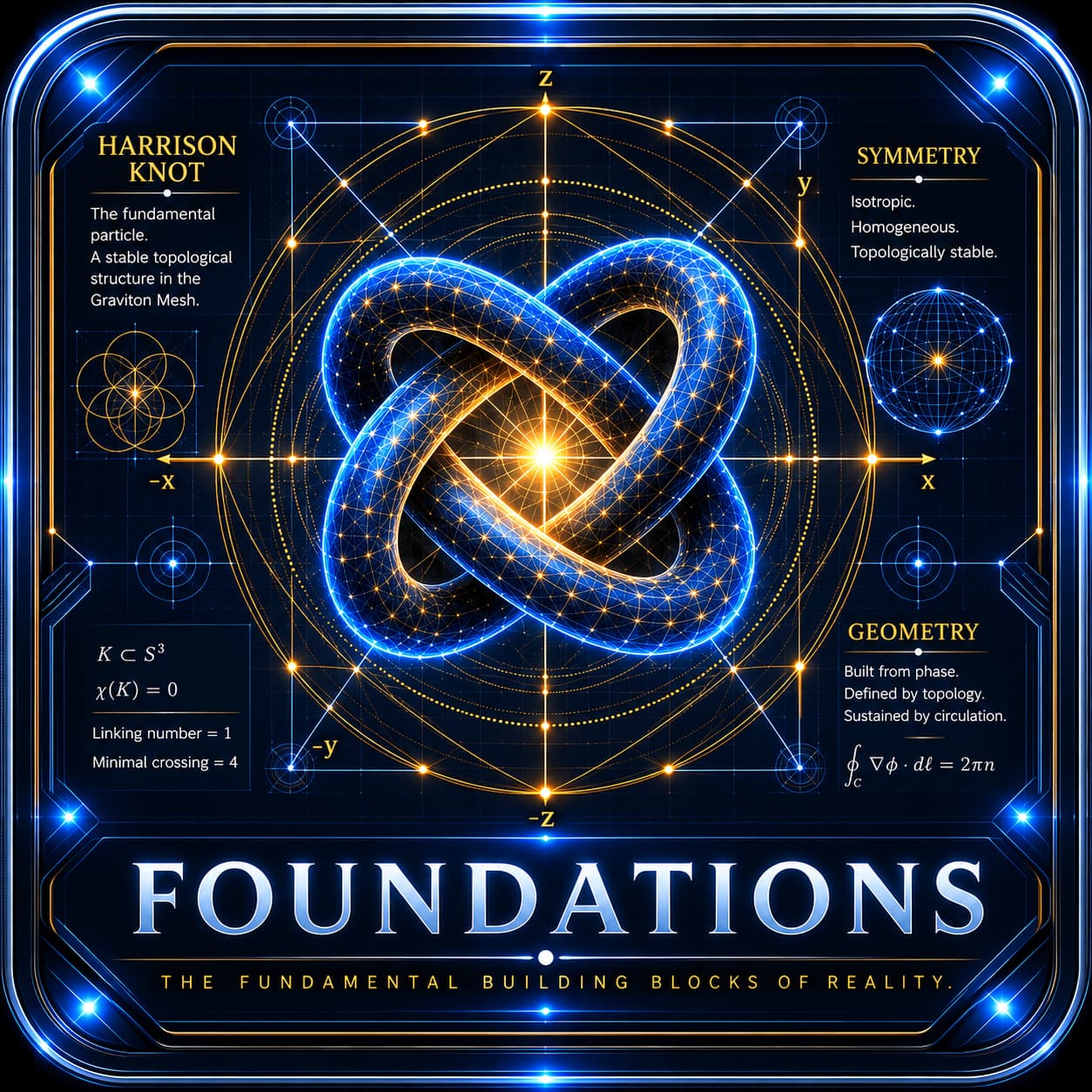
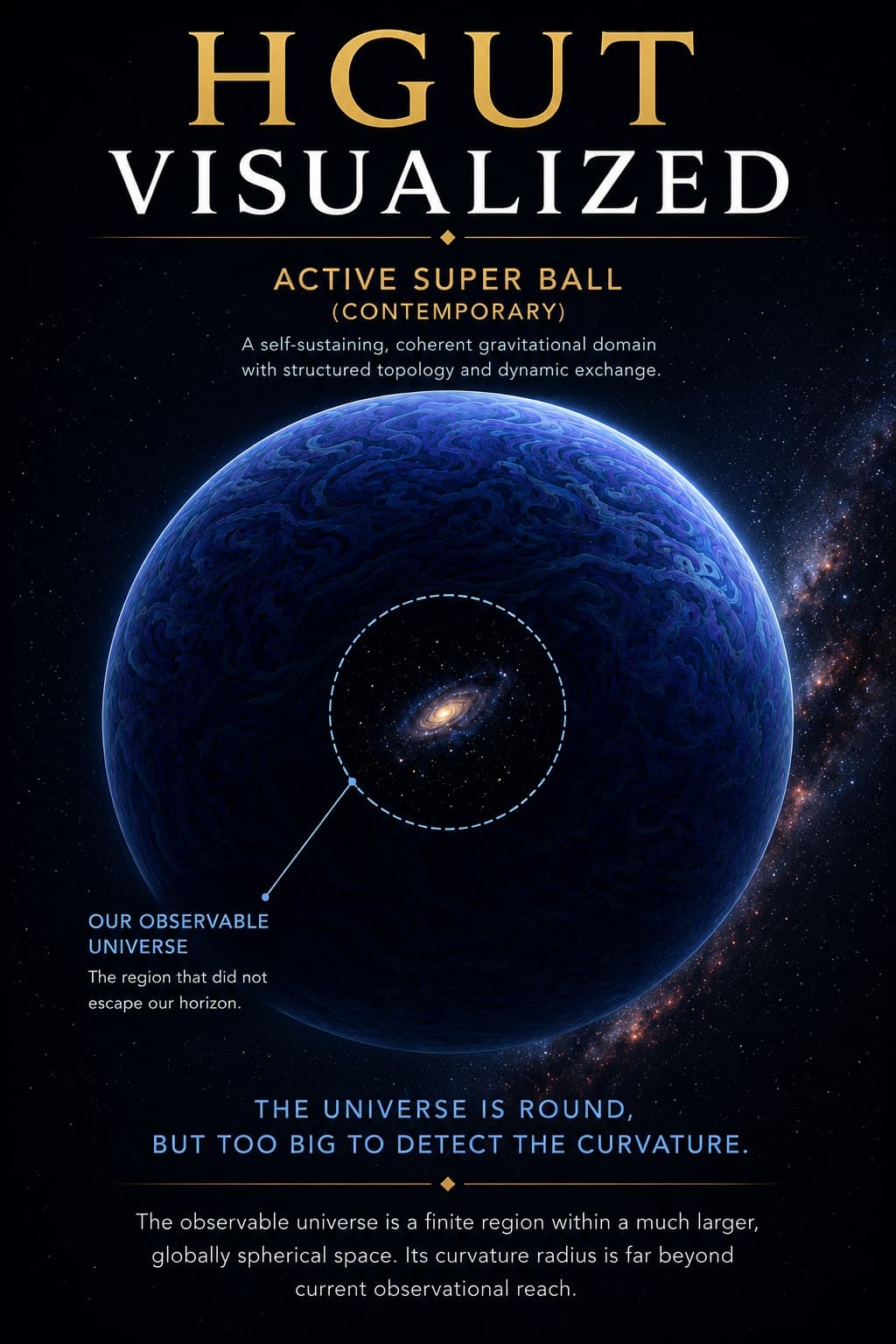
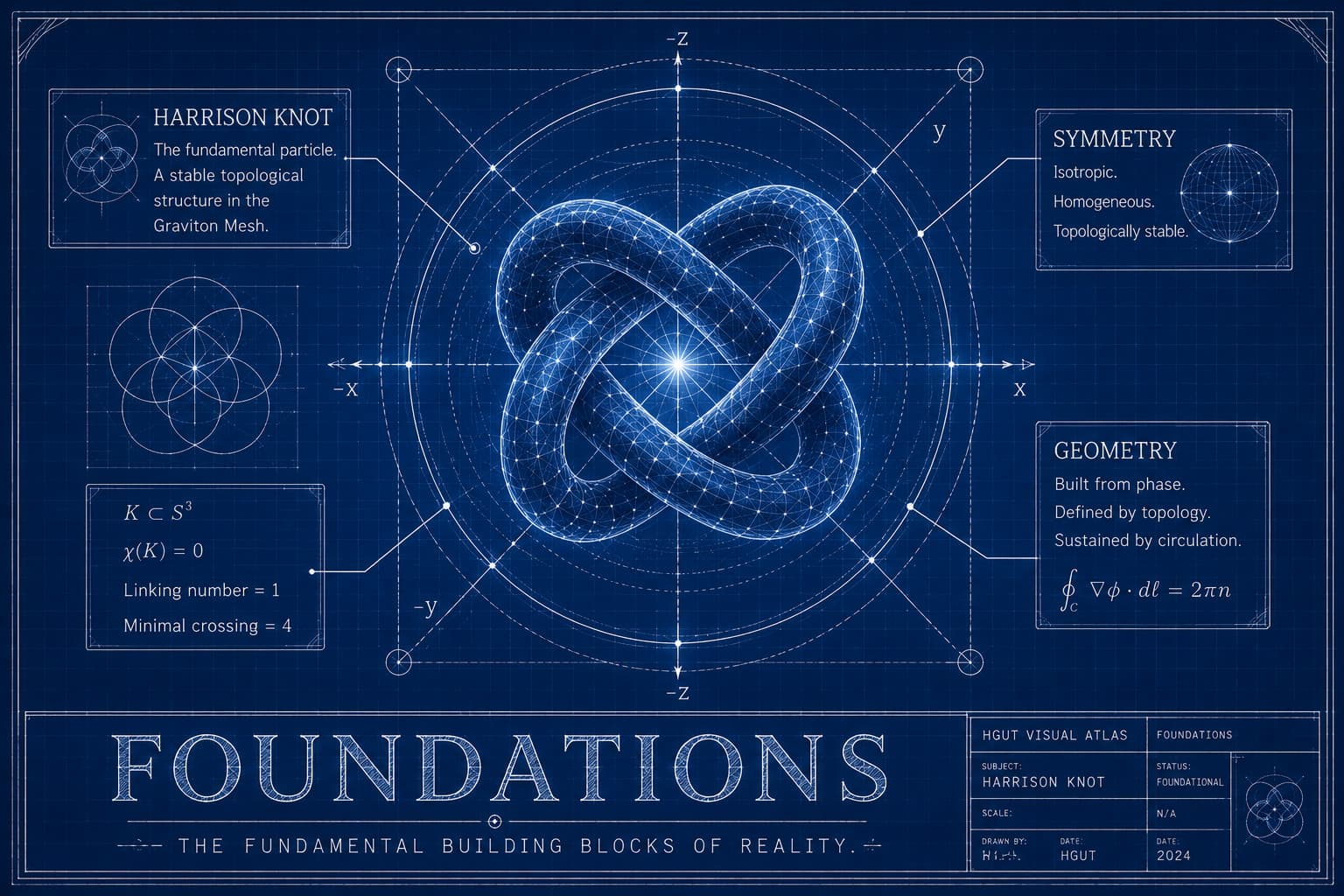
A visual introduction to the foundational principles, structures, and physical ontology of HGUT.

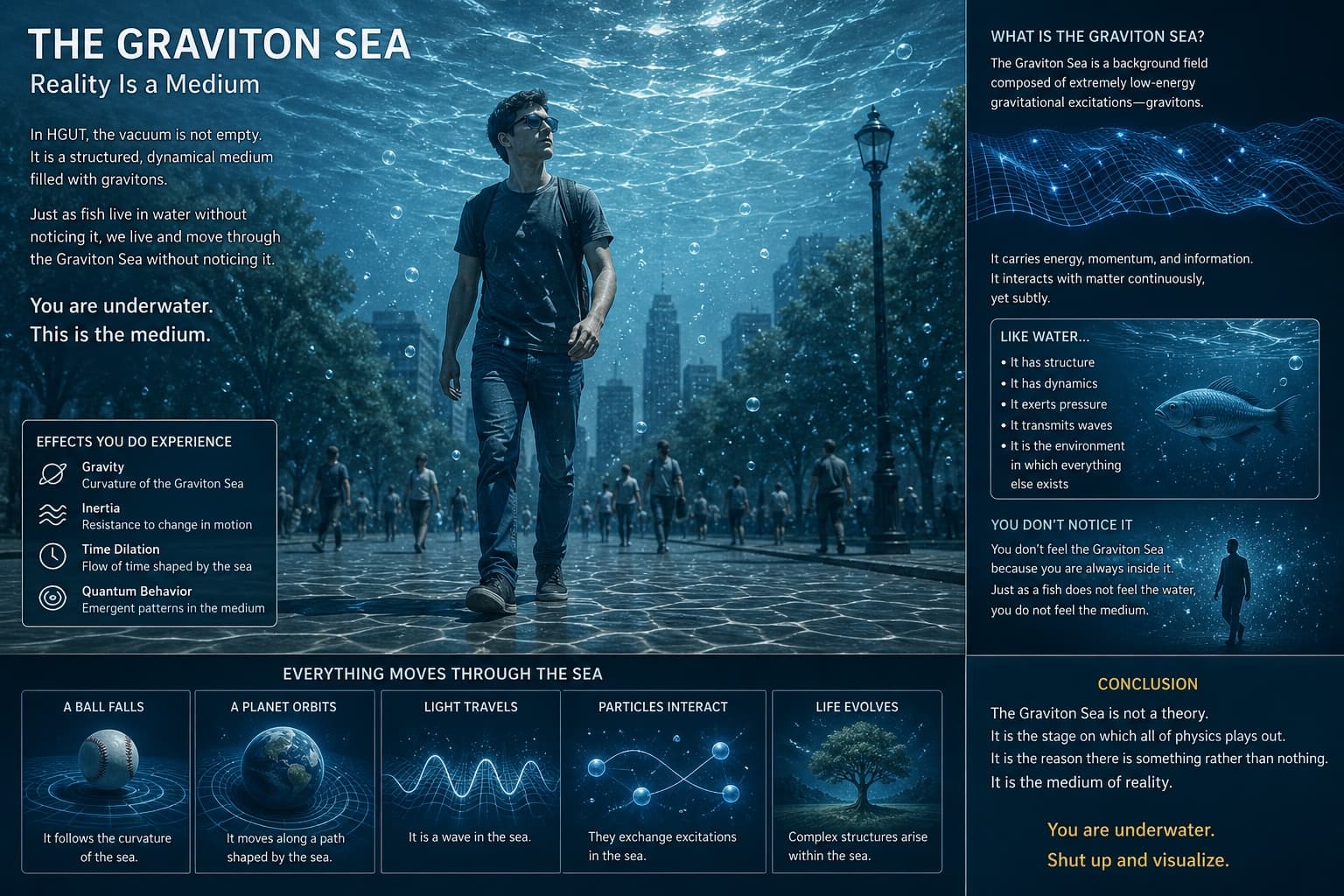
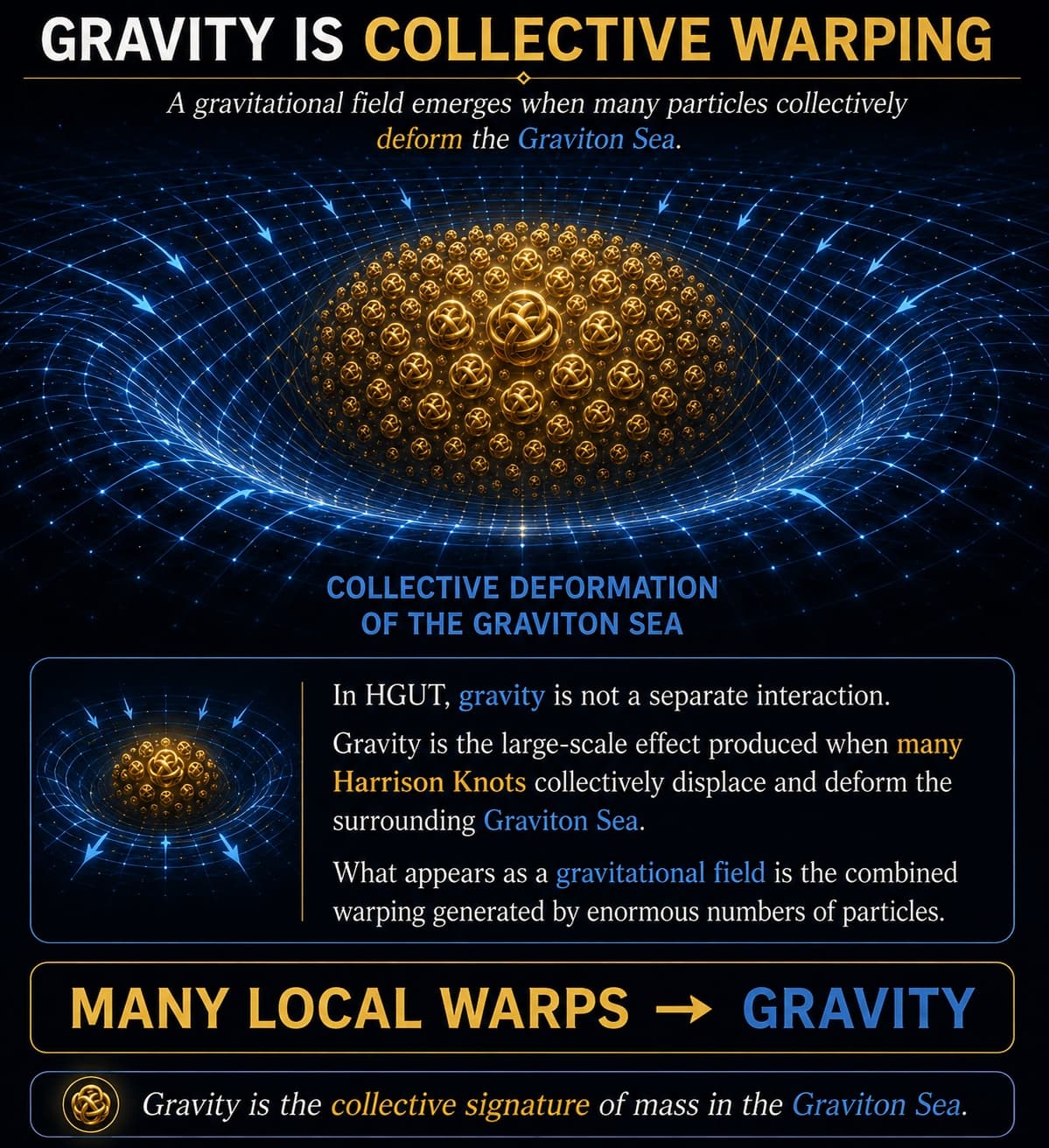
Visualizations of the Graviton Sea, collective displacement, curvature, attraction, and gravitational structure.

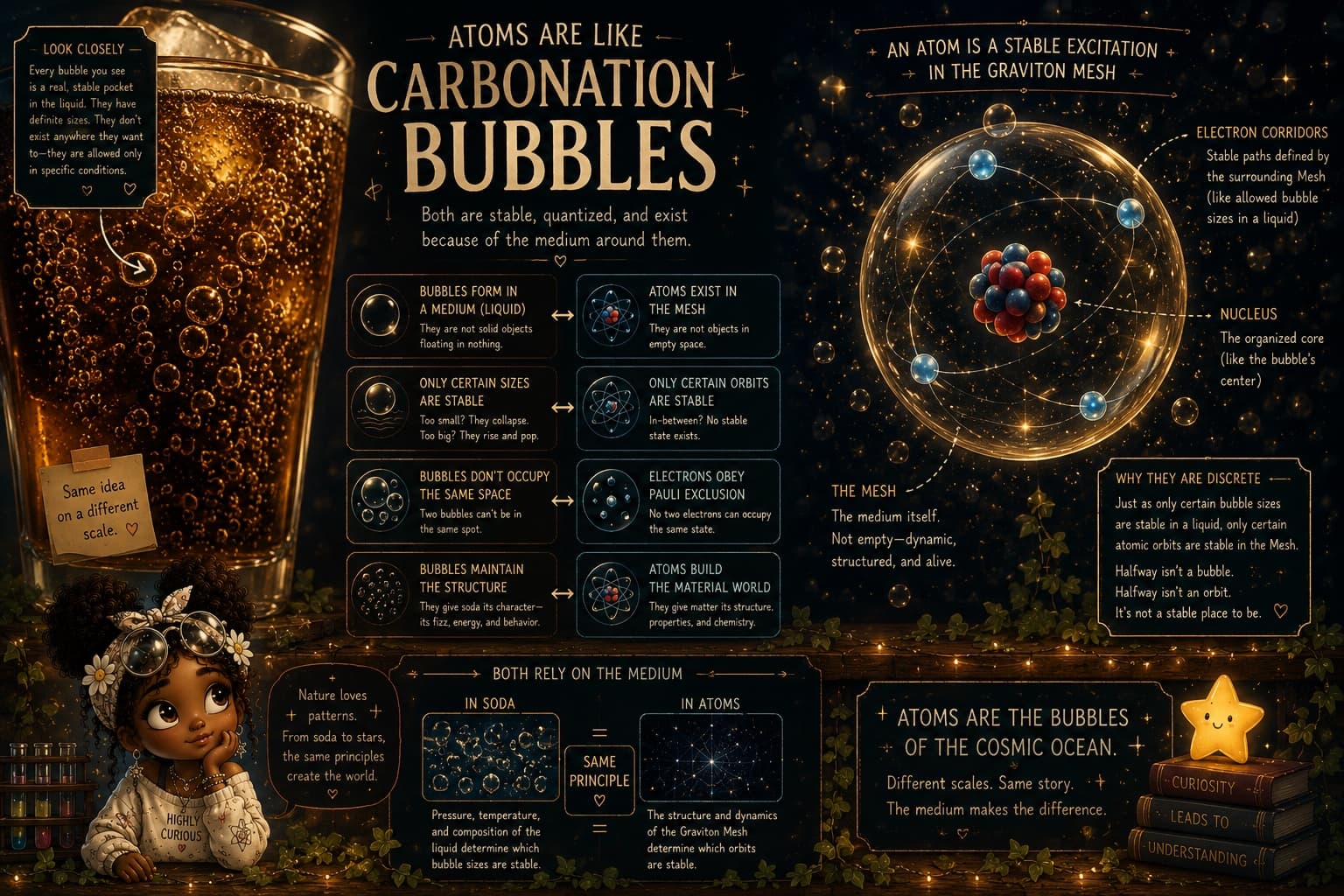
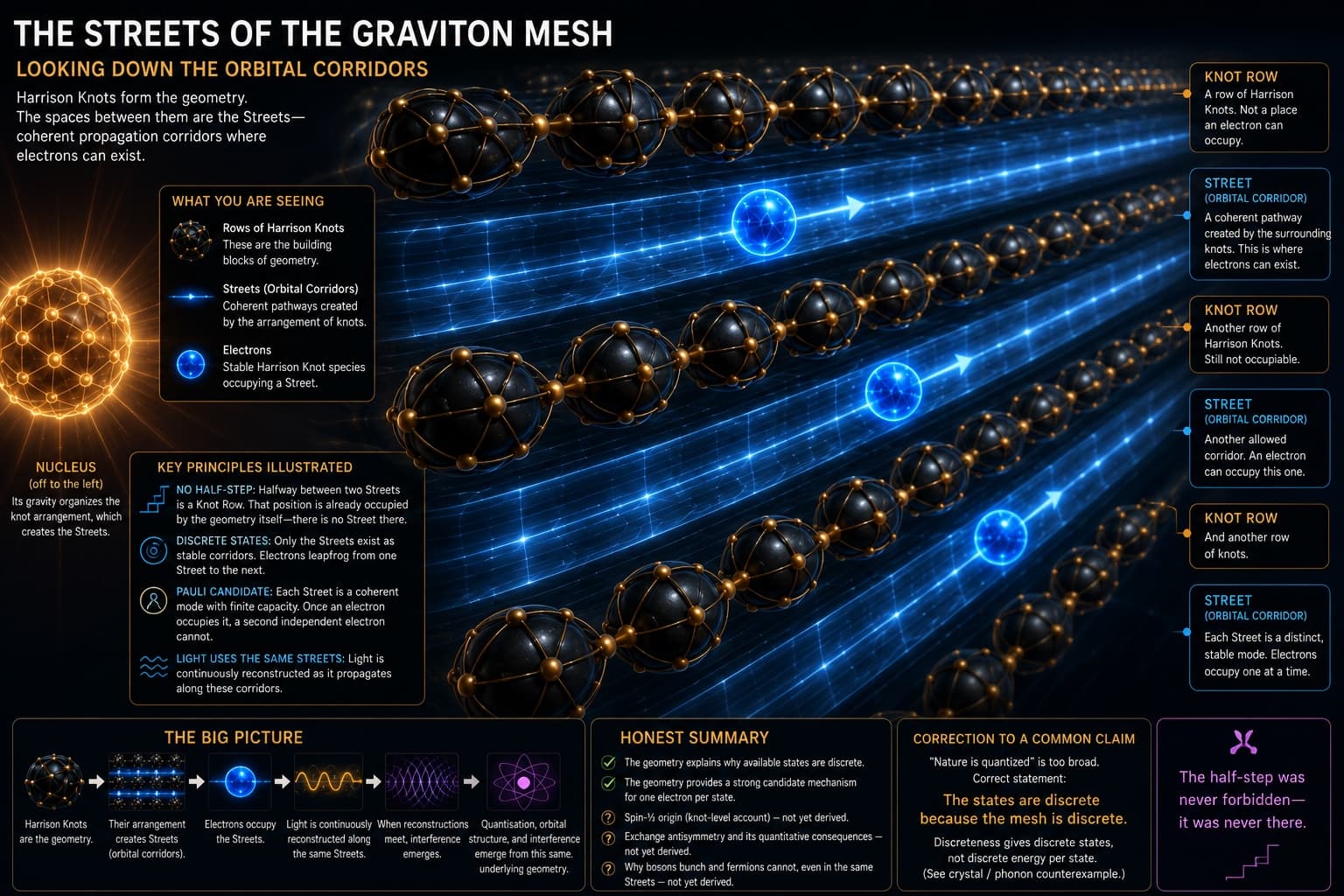
Visualizations of atoms, localized structures, material organization, and matter embedded within the Graviton Sea.

Visualizations of quantum behavior, measurement, entanglement, transport, interference, and localized detector events.
From Visualization to Mathematics
The HGUT Visual Atlas is designed to build physical intuition through carefully crafted visualizations. Every exhibit is accompanied by detailed mathematical derivations, governing equations, simulations, and technical discussion in the corresponding volumes of the Harrison Grand Unified Theory book series.
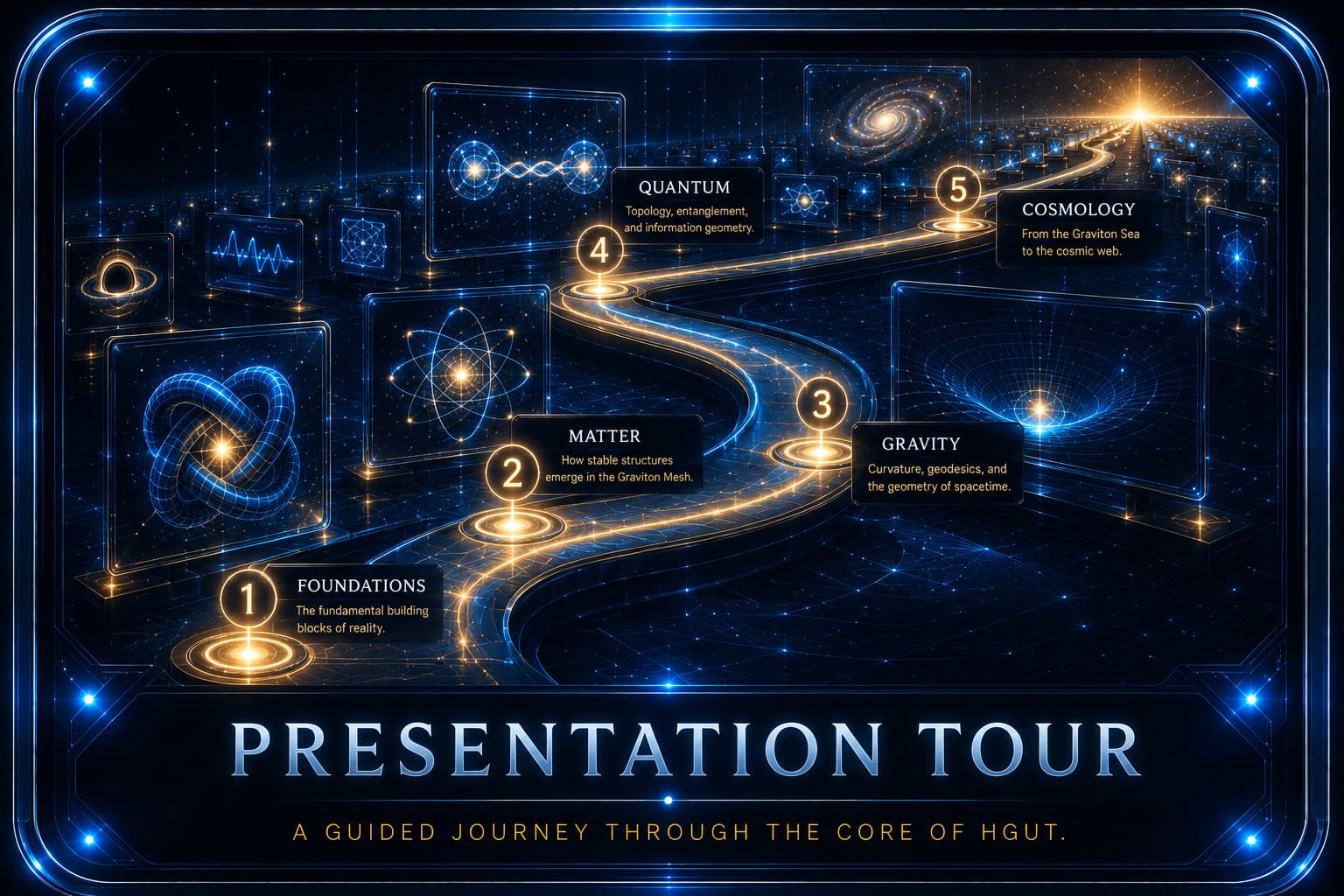
Presentation Tour
HGUT Visualized is a curated sequence of diagrams, illustrations, analogies, and conceptual maps. The presentation begins with the apparent continuity of reality and progresses through Harrison Knots, the Graviton Sea and Mesh, matter, gravity, quantum behavior, and cosmology.
Every panel is displayed in order in a numbered gallery. Select any image to enlarge it, then use the forward and backward arrows to continue through the presentation.

Complete Numbered Gallery
Browse the full presentation in sequence and open each panel in the Atlas lightbox.
Featured Visual Collections
These are not isolated illustrations. Each collection is an ordered visual explanation connected to a full HGUT Solution article.

An accessible fifteen-image visual sequence presenting the HGUT corridor interpretation of Bell correlations, pair formation, measurement, and topological fracture.
A sixteen-panel technical gallery examining the shared pre-measurement corridor, pair preparation, nonseparable structure, analyzer settings, and the physical configuration that exists before either outcome is recorded.

A sixteen-panel technical gallery examining analyzer interaction, joint boundary conditions, outcome selection, corridor fracture, causal relaxation, recorded results, and the no-signaling structure after measurement.

A six-panel visual explanation of mode coupling, symmetric and antisymmetric output channels, destructive interference, and coincidence suppression.

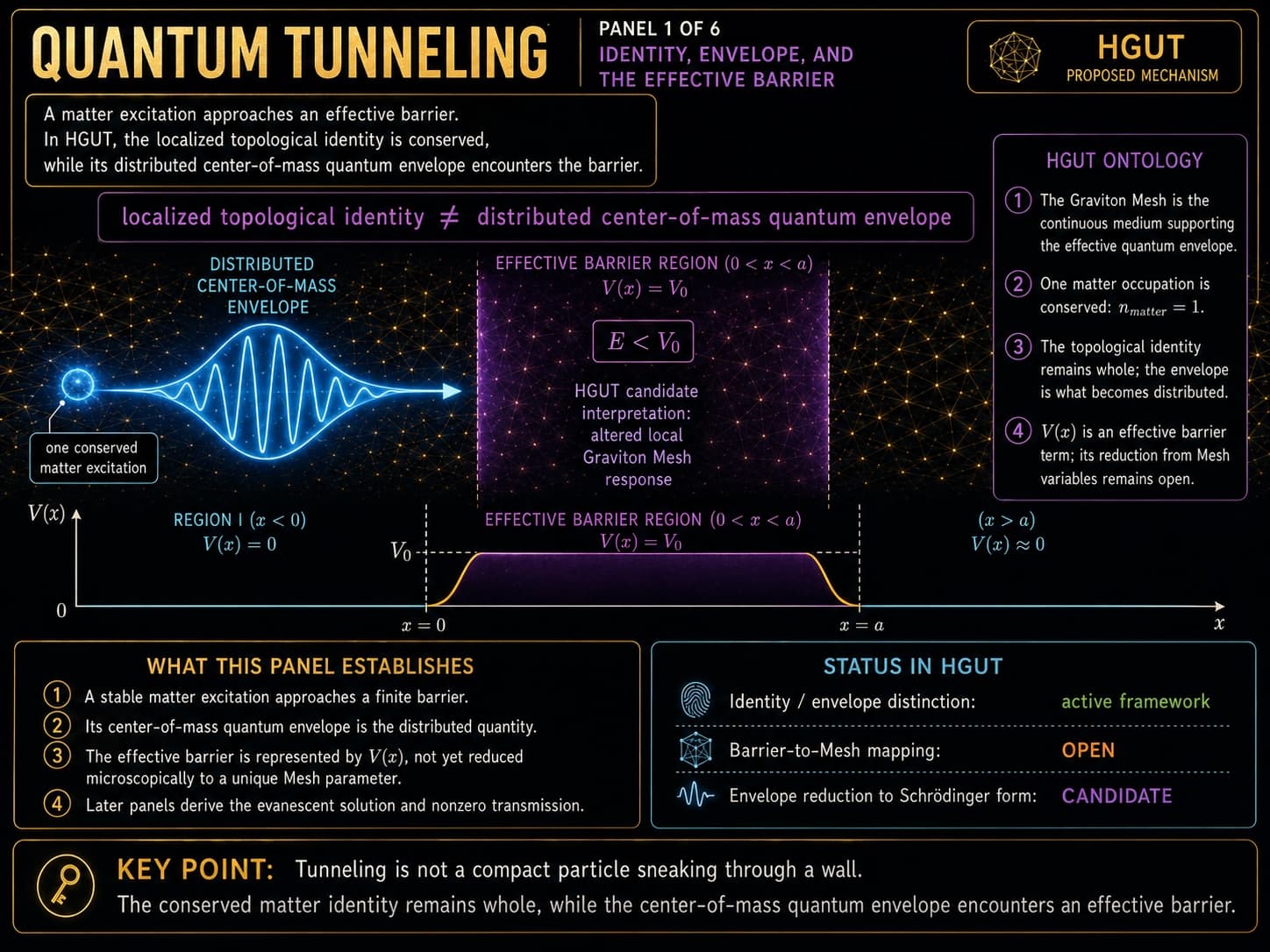
A six-panel visual sequence exploring barrier penetration as continuous medium behavior rather than a particle appearing discontinuously on the far side.

A five-panel visual explanation of polarization filtering, analyzer orientation, measurement outcomes, and the HGUT interpretation of the polarizer experiment.

Explore the Atlas
Browse all exhibits
Browse all visual exhibits by topic, scale, and concept.
Browse Exhibits
Presentation Tour
Follow the curated journey
Follow the curated journey through the ideas of HGUT.
Start Tour
Foundations
Begin with the fundamentals
Begin with the fundamental principles and building blocks of the theory.
View Foundations