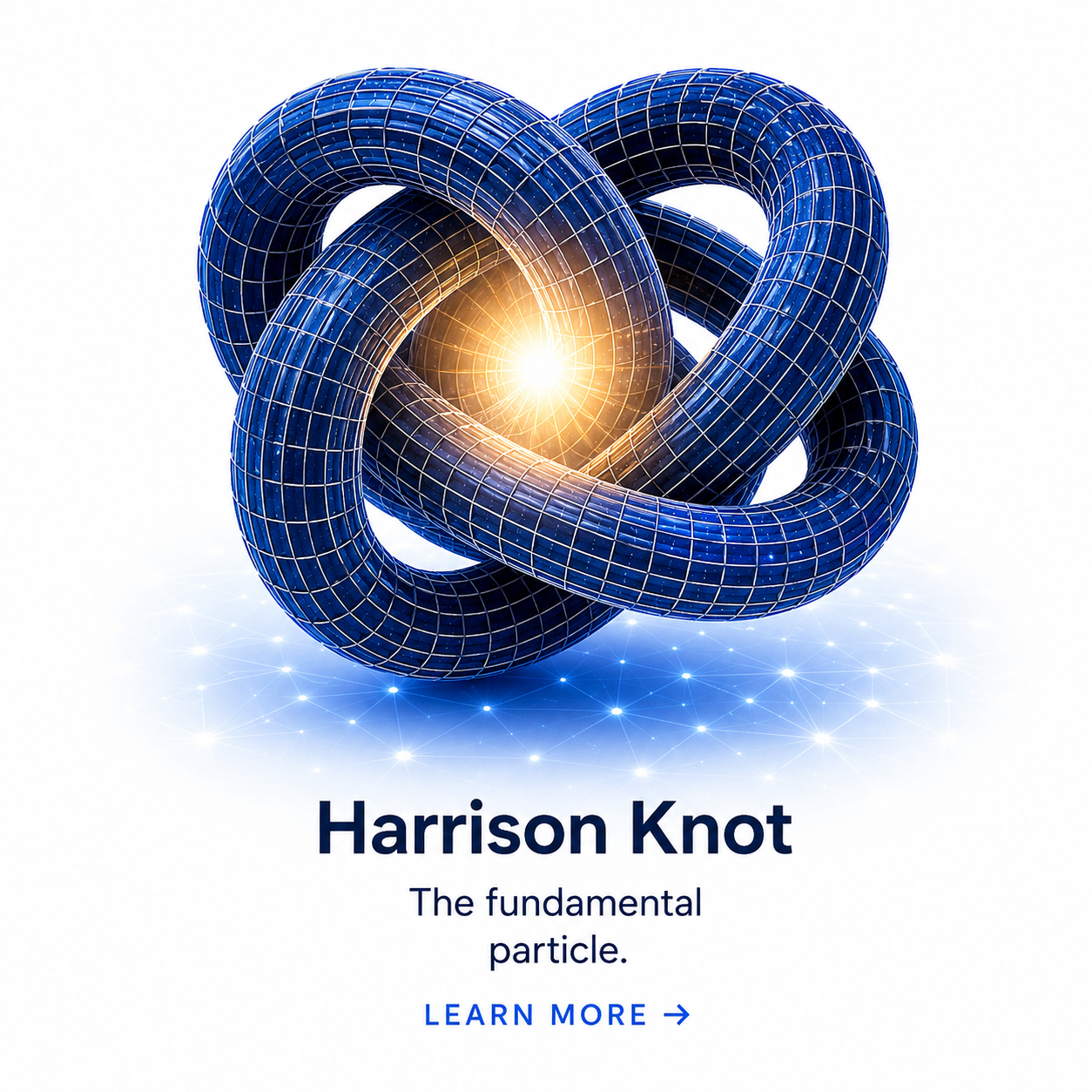
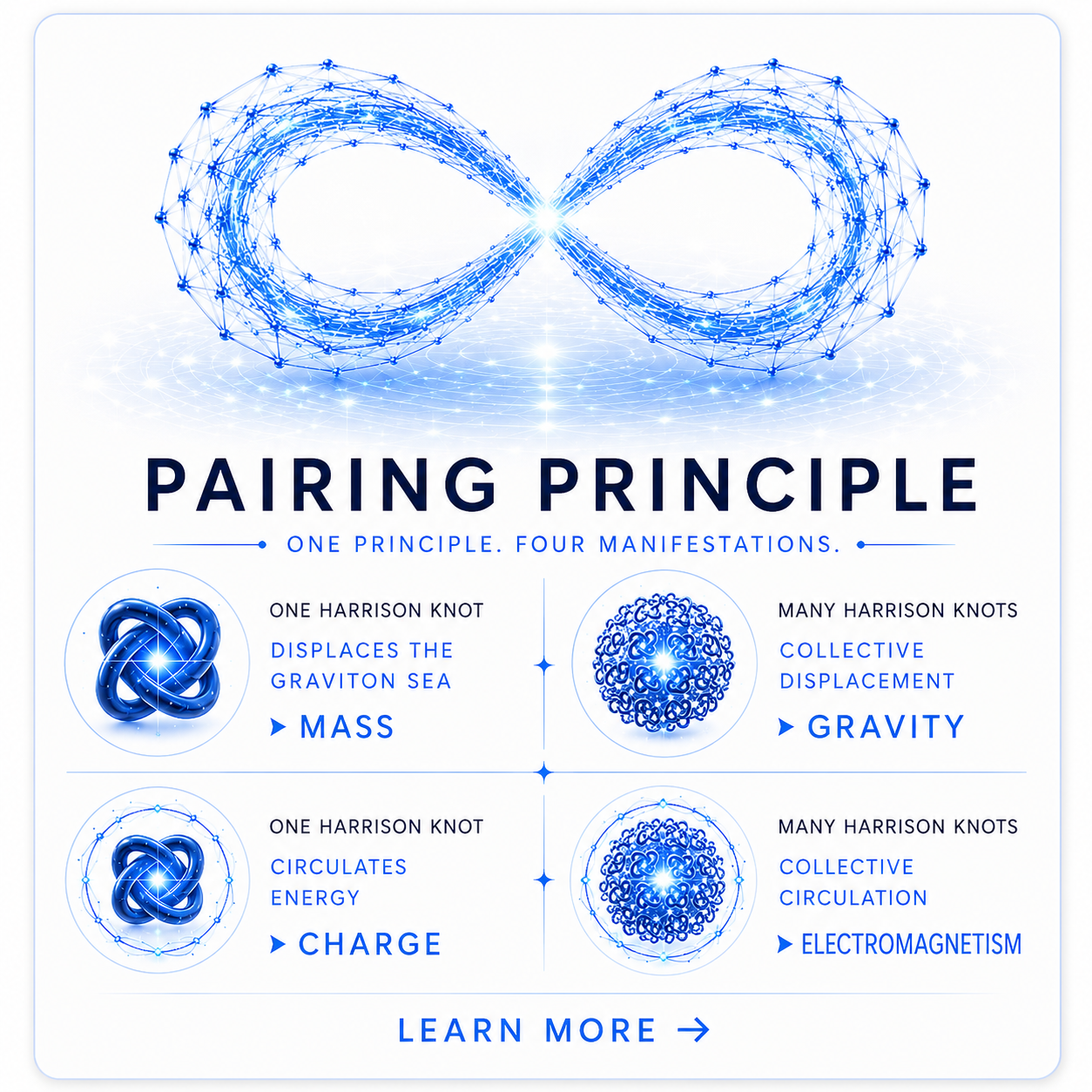
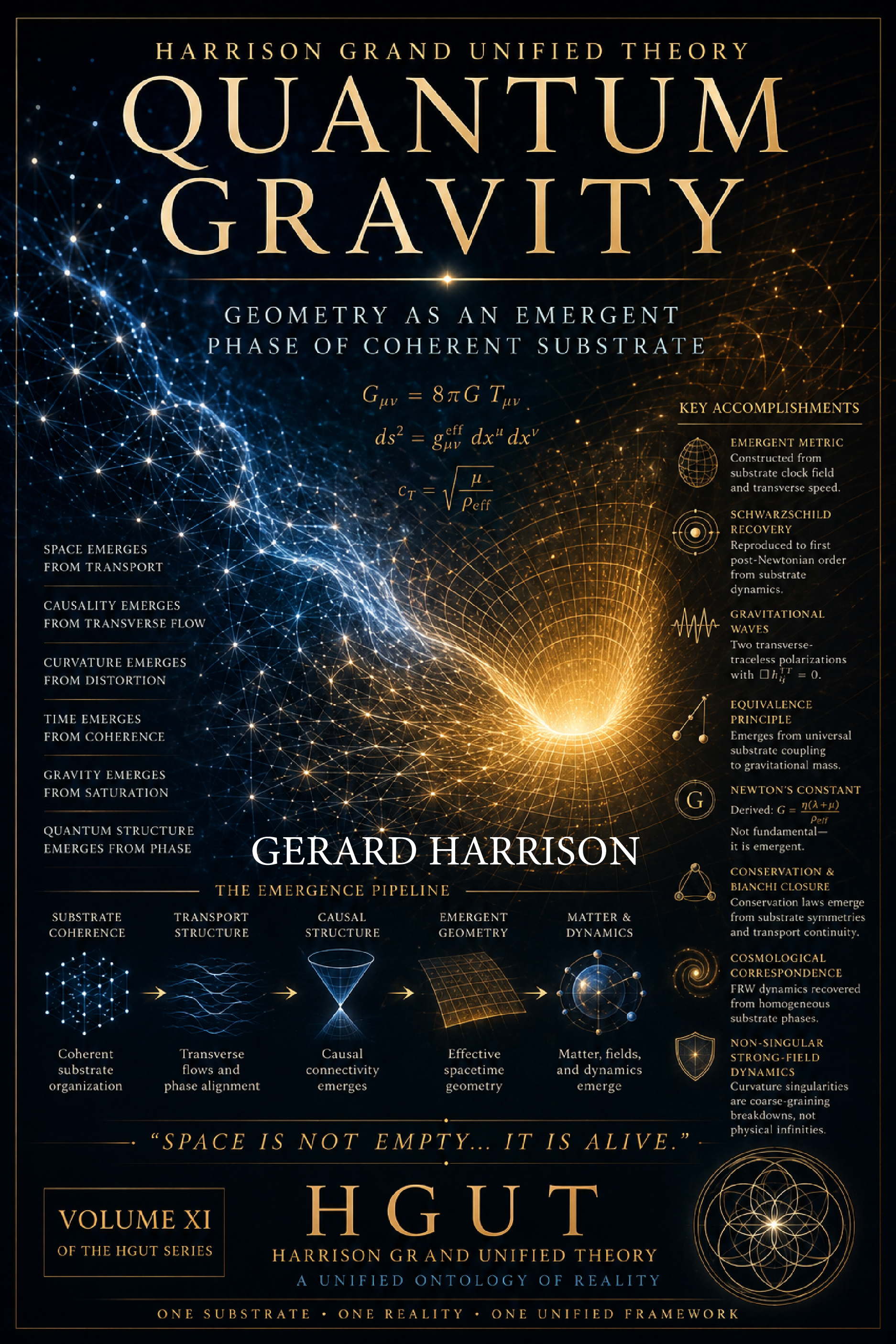
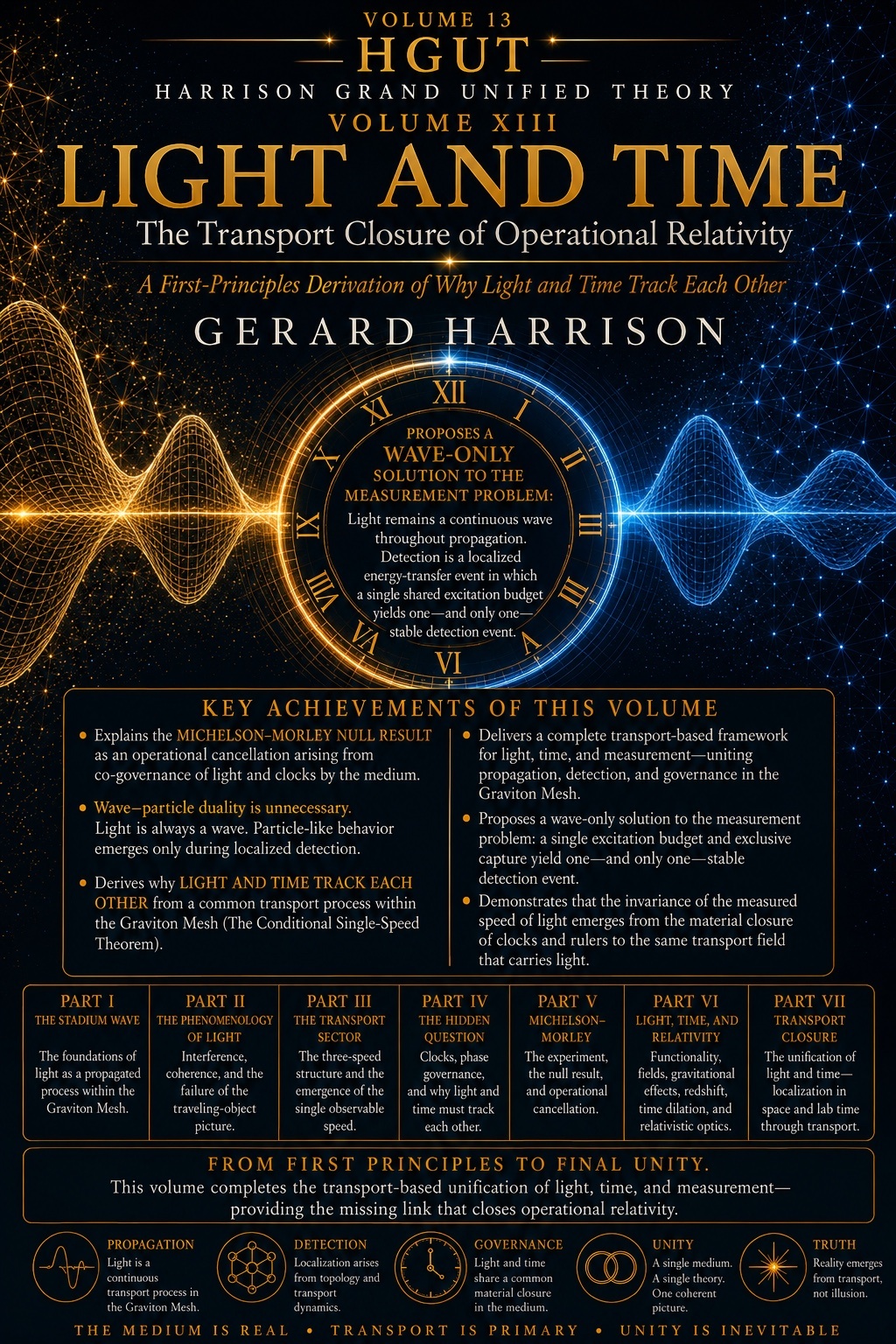
HGUT demonstrates that all physical phenomena arise from the dynamics of one fundamental constituent: the Harrison Knot.

One Constituent.
One Framework.
One Reality.
This is an open research initiative. Explore. Test. Challenge. Improve. Together.
Submit a Critique



CRITICISMS WILL EITHER STRENGTHEN OR FALSIFY THE FRAMEWORK.
HGUT WANTS THE TRUTH MORE THAN IT WANTS TO BE RIGHT!
Science advances through criticism, replication, and collaboration. If you find an error, challenge an idea, or have a better explanation, we want to hear from you.
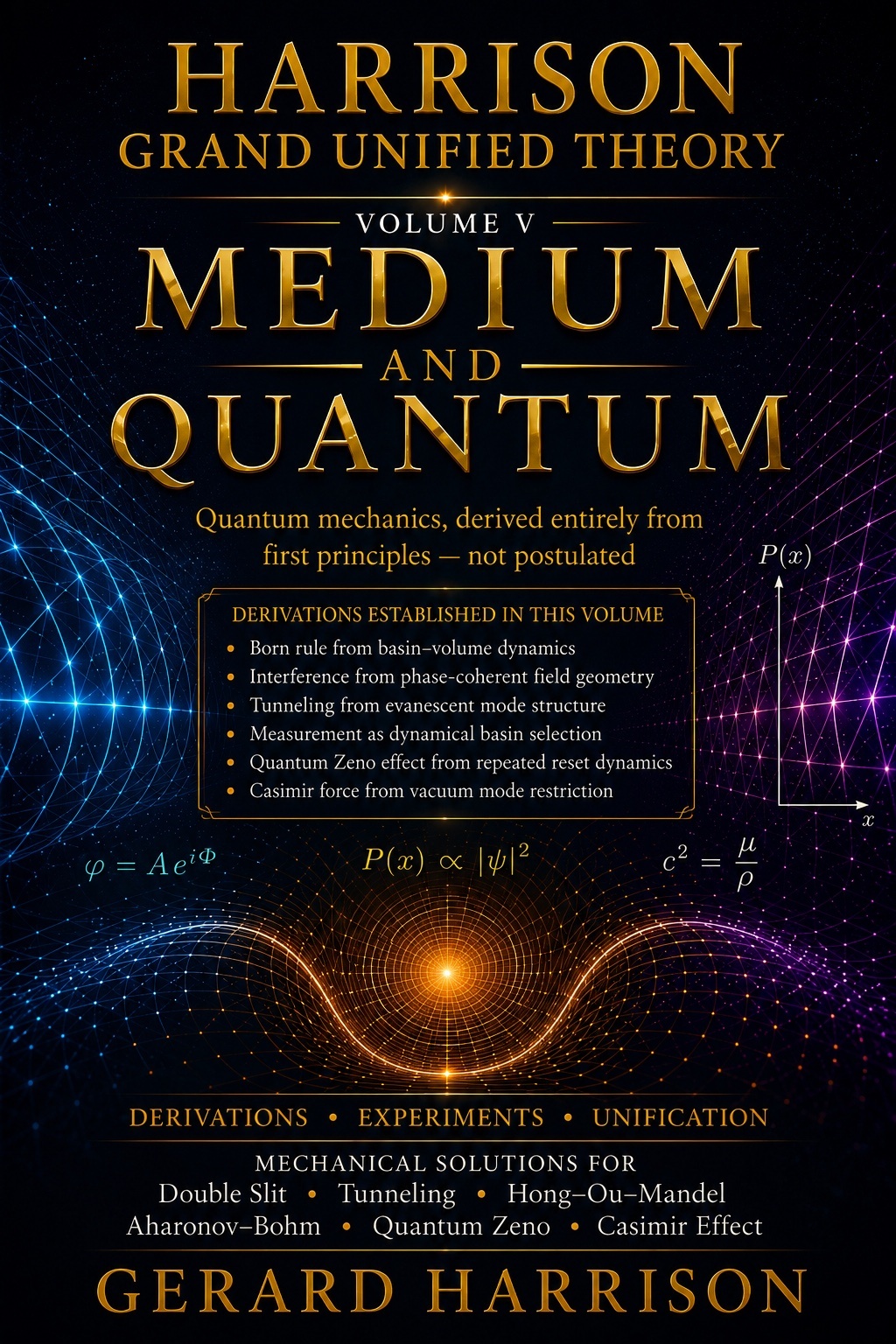
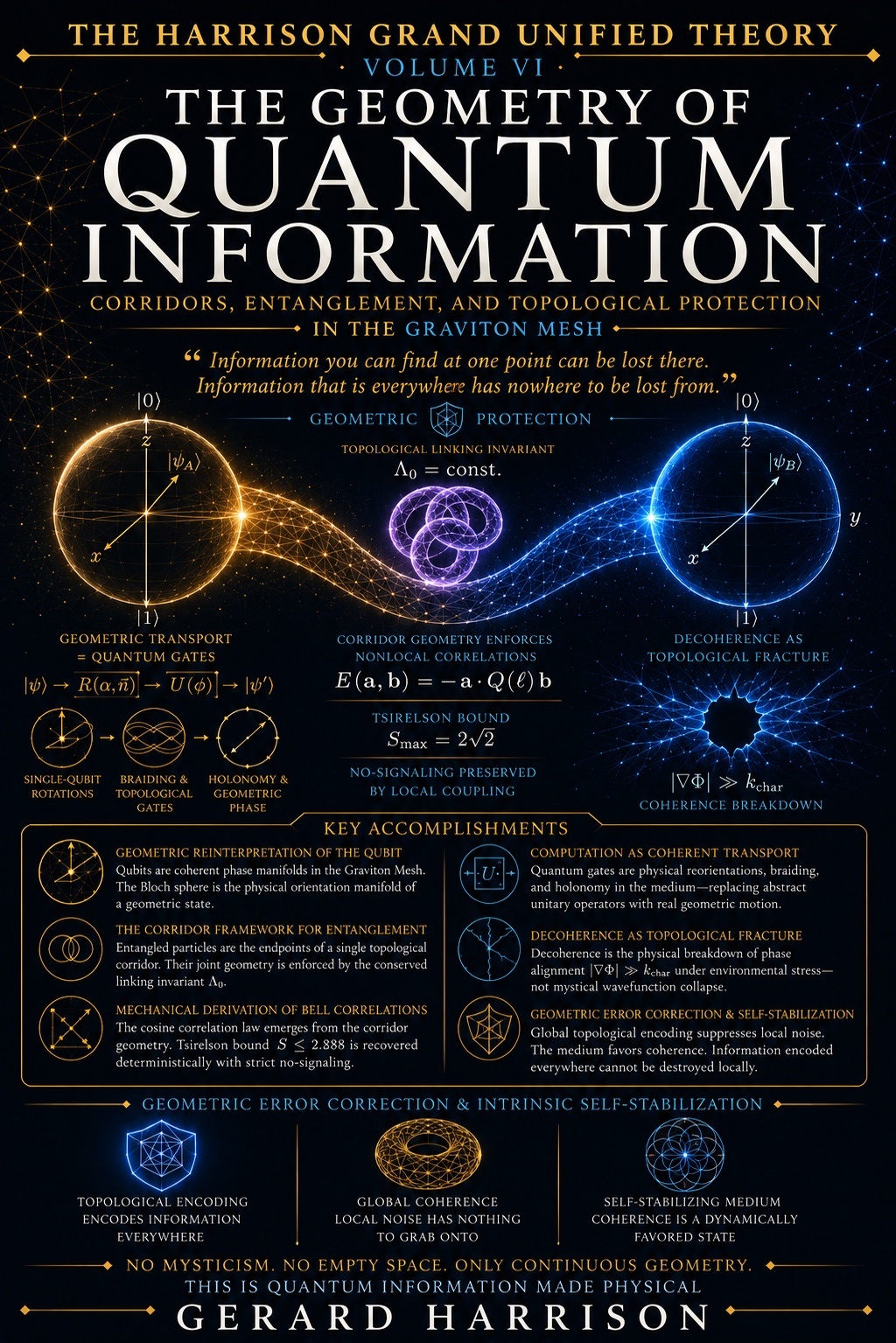
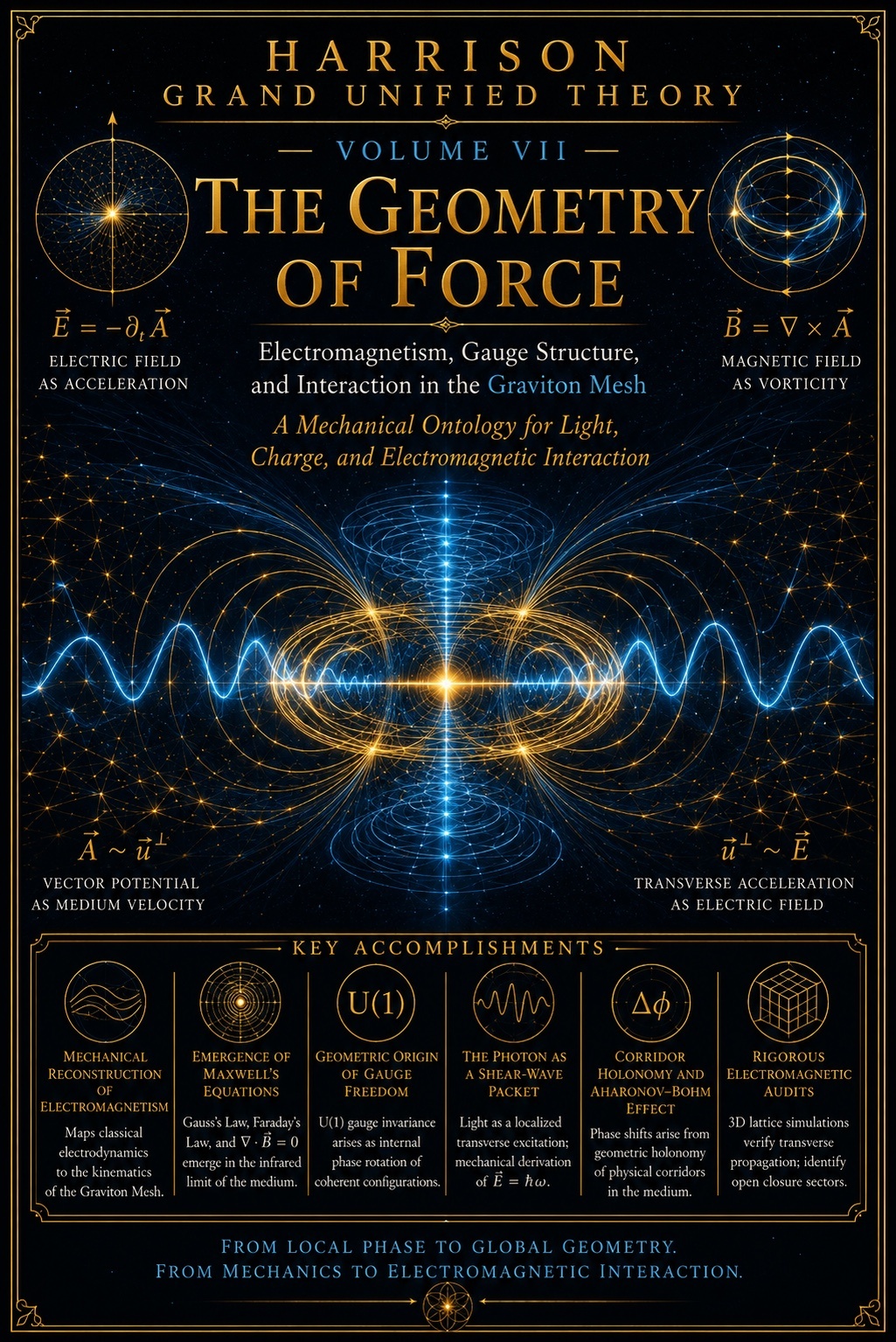
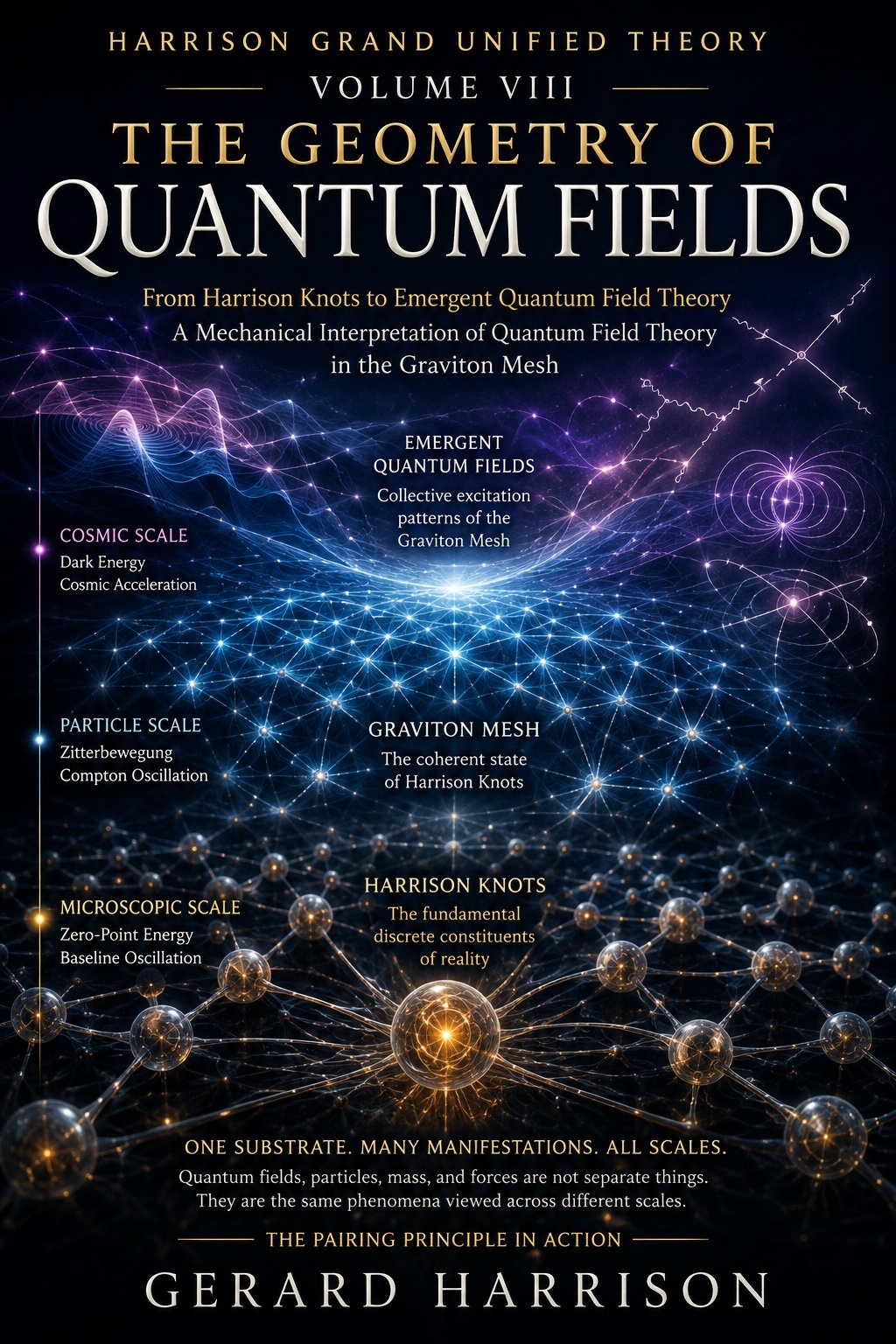
Submit a CritiqueEleven completed research volumes developing the Harrison Grand Unified Theory from first principles.
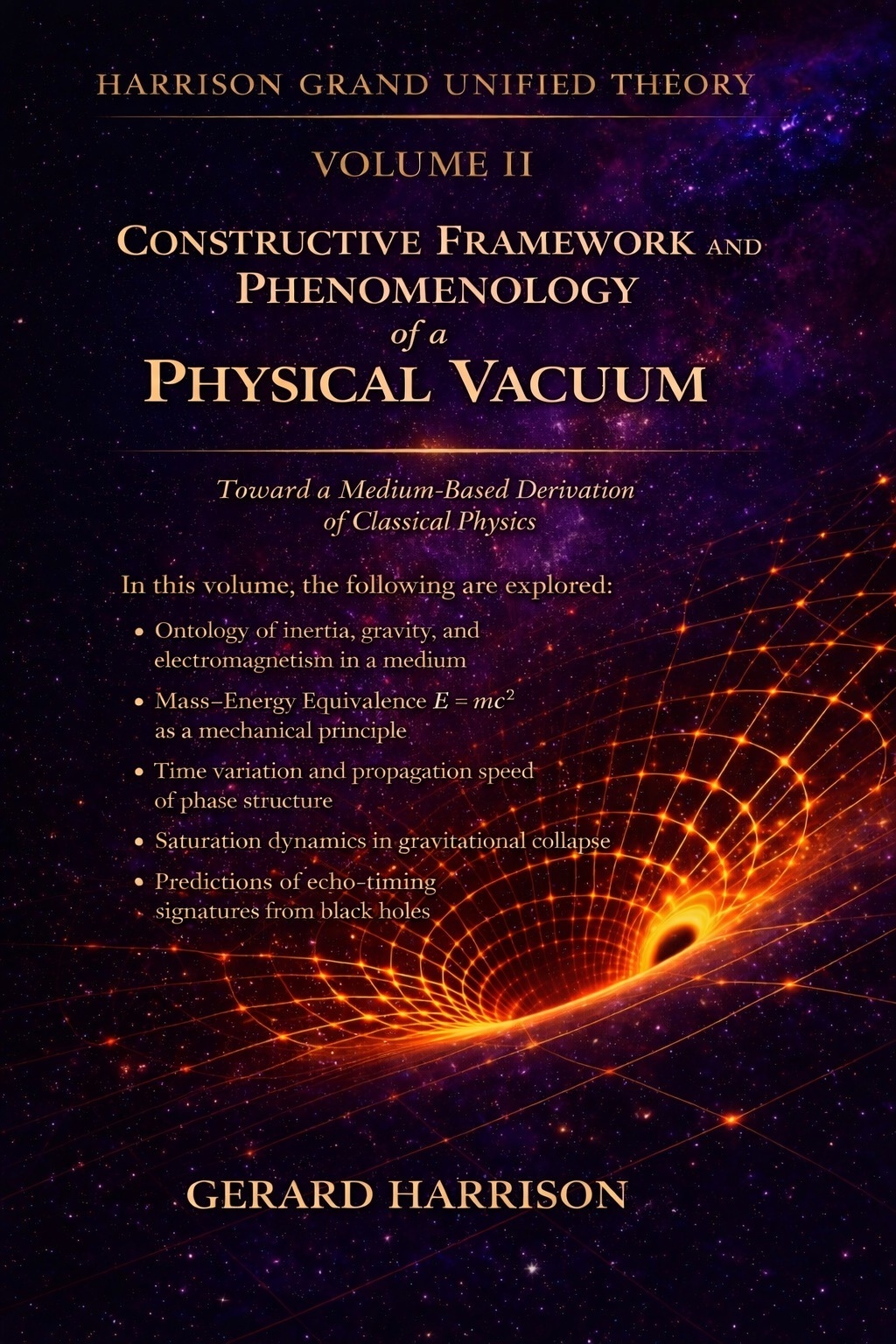
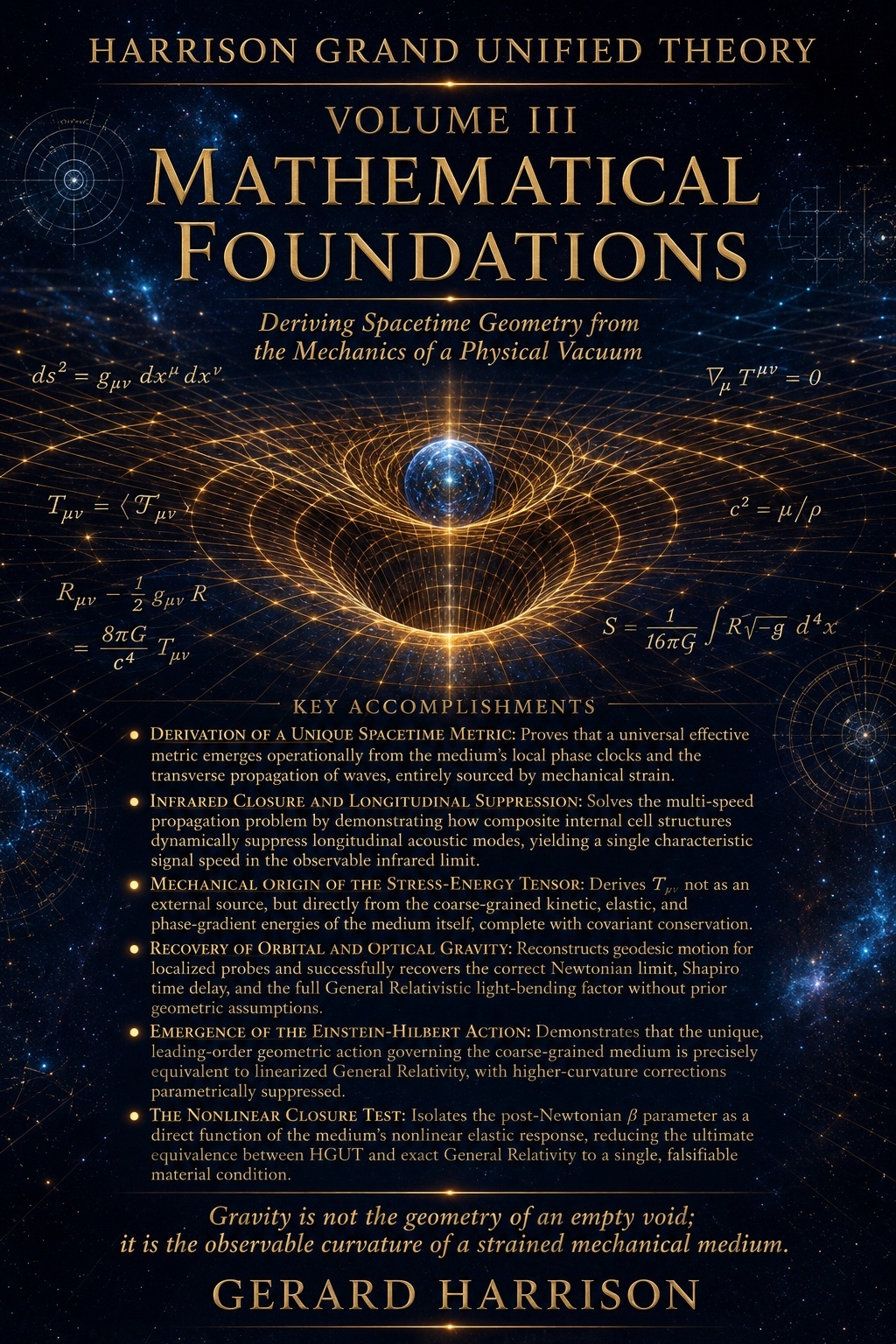
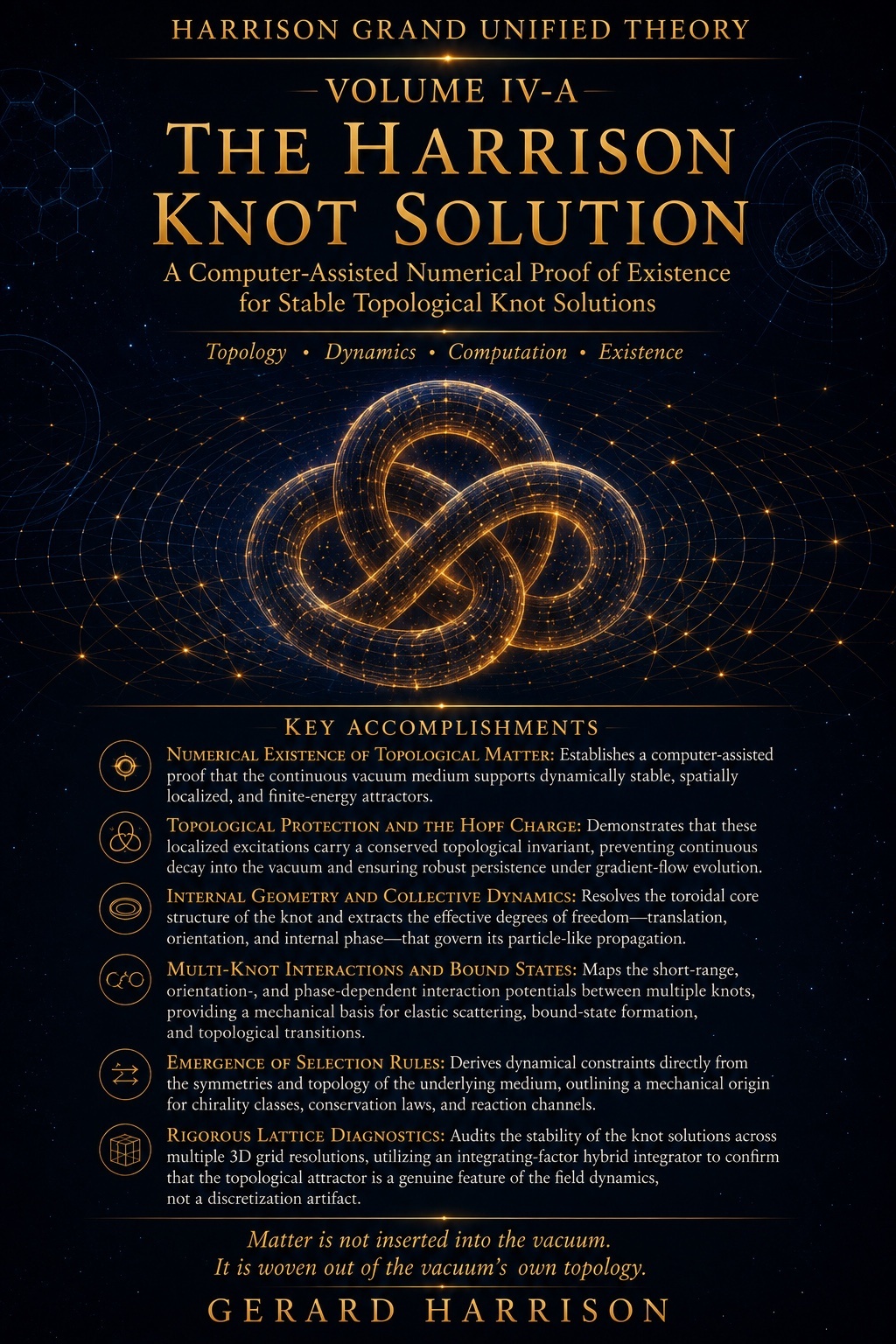
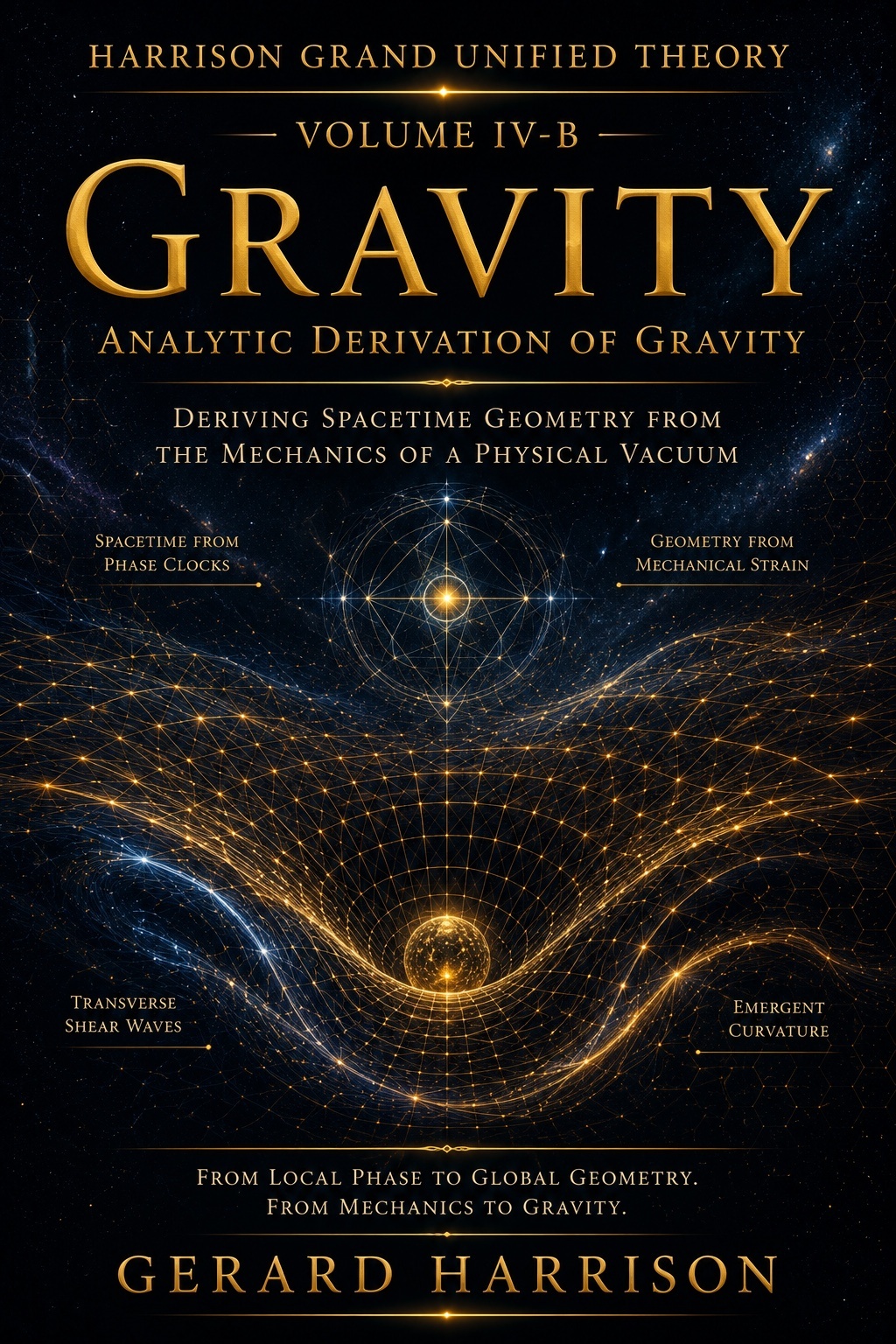
Active Research Programme
Follow the mathematical, computational, and conceptual work currently advancing HGUT. Every programme has a defined objective, an evidence trail, and a clear next research gate.
Computational Programme
Building and validating the organized numerical medium required for particle, gravity, transport, and measurement calculations.
Numerical Validation
Testing whether the electron is the stable, charged, finite-energy Q = 1 Hopf-type Harrison Knot.
Active Development
Deriving detector capture, exclusive outcomes, Born weighting, entangled correlations, and stable records from physical dynamics.
Active Development
Determining how the transverse, longitudinal, and phase sectors recover one observable relativistic causal structure.
The Frontiers of Understanding
These are not vague questions. Each problem has a precise target, a documented evidence trail, and a defined standard for derivation, numerical closure, experimental verification, or falsification.
Numerical Closure
Find and validate the stable, charged, finite-energy Hopf-type Harrison Knot identified with the electron.
Foundational Closure
Determine how the transverse, longitudinal, and phase sectors recover one observable relativistic causal structure.
Dynamical Closure
Derive winner-take-all detector capture, definite outcomes, and Born-weighted statistics from physical dynamics.
Coupled-System Closure
Close the two-way dynamical loop between coherent topology, emergent geometry, and quantum phase evolution.
Interaction Closure
Derive strong linking, weak transformation, baryon identity, particle stability, and decay within the topological framework.
Computational Closure
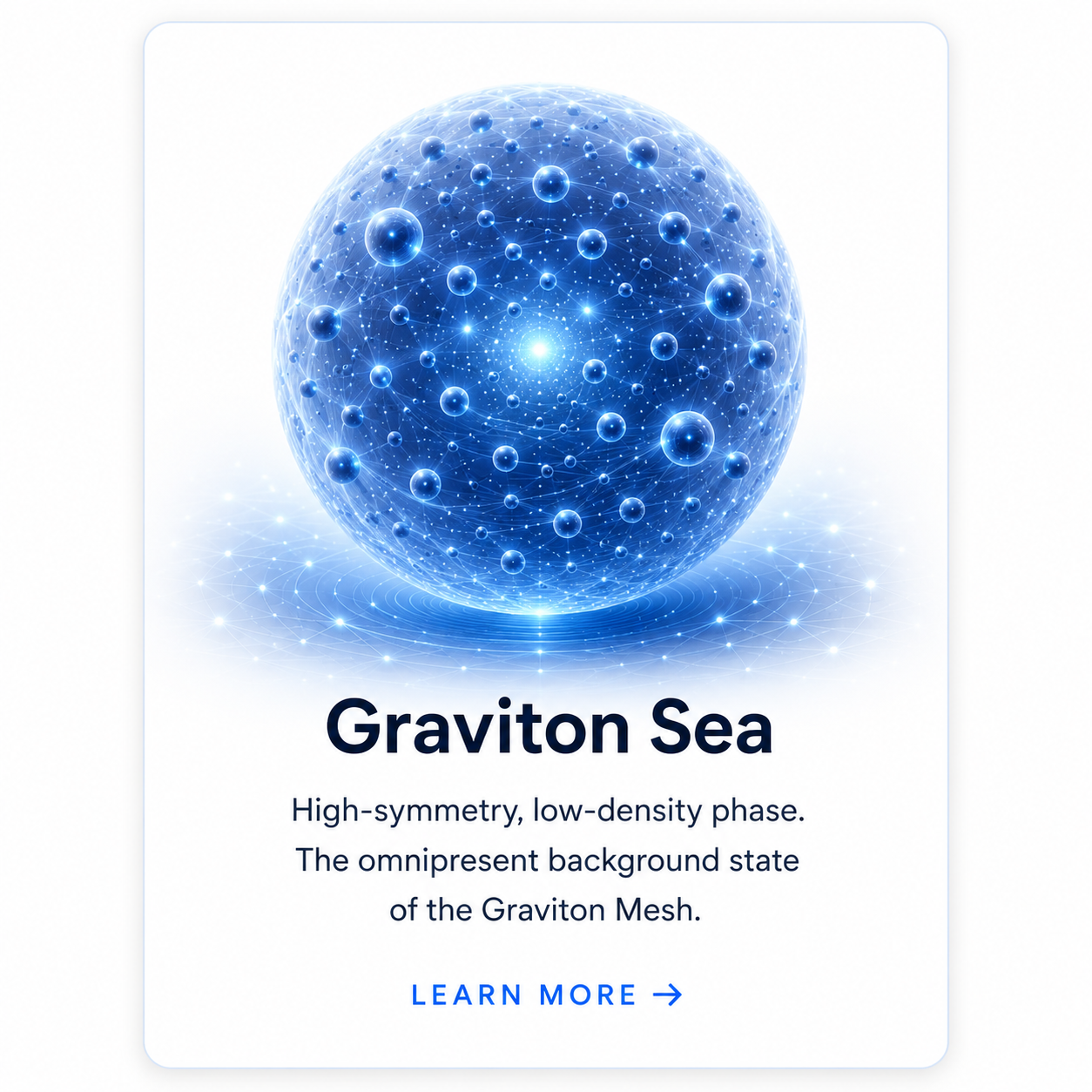
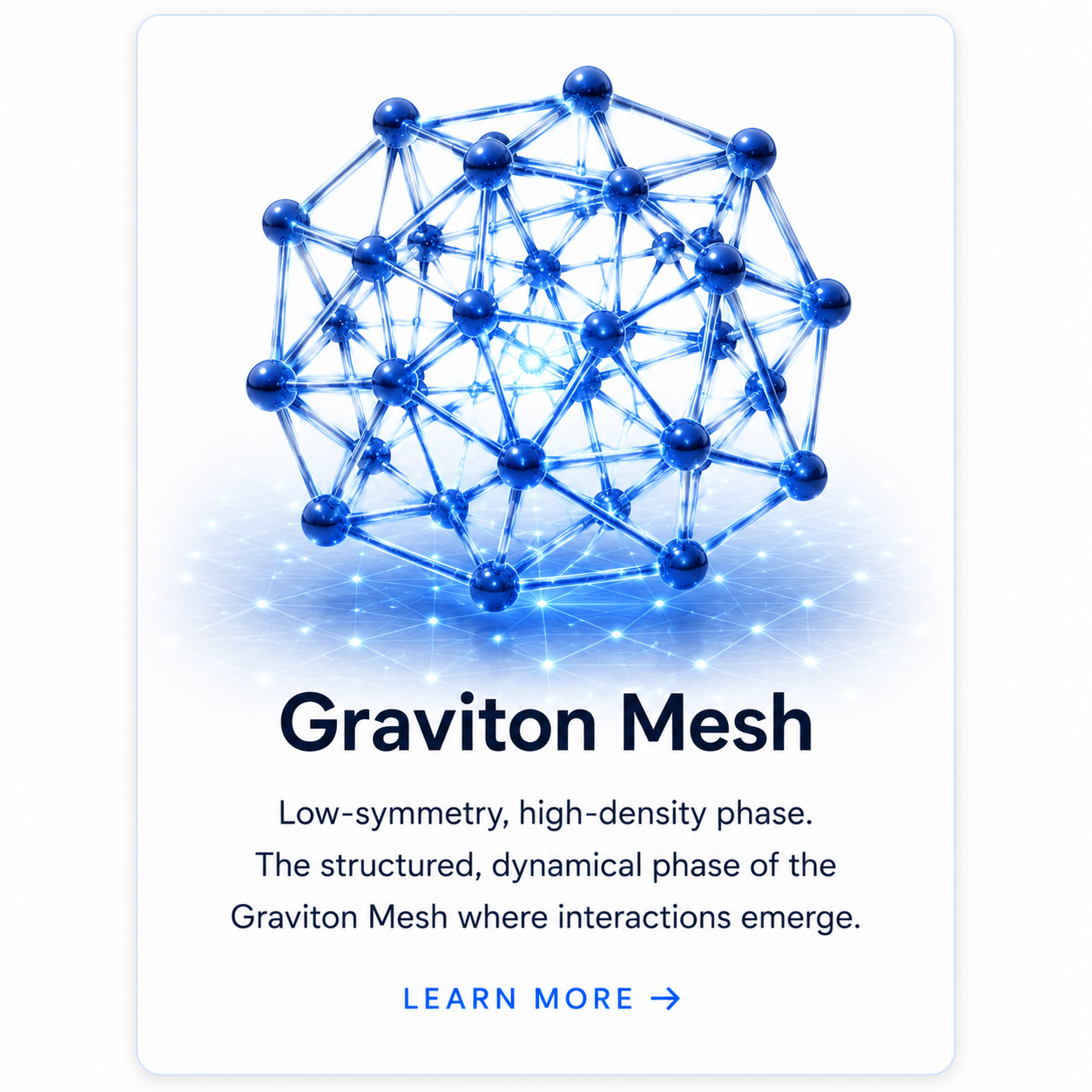
Construct the nonlinear collision model and determine how it produces the Graviton Mesh and the cosmological initial state.
Open Science
Contributors are invited to test the mathematics, reproduce simulations, identify contradictions, develop better methods, and submit falsifying evidence.
HGUT is an open research initiative. Whether you're a physicist, mathematician, programmer, artist, writer, educator, or simply curious, your contributions can help strengthen—or challenge—the framework.
Derivations, proofs, analysis.
Theory, models, interpretation.
Numerical models, verification.
Code, tools, automation.
3D models, graphics, animation.
Articles, reviews, translations.
Submit research, mathematical derivations, simulations, visualizations, code, articles, critiques, or experimental ideas. Every meaningful contribution will be reviewed and acknowledged.
Submit a ContributionReceive updates on new HGUT volumes, research papers, simulations, visualizations, and opportunities to contribute to the project.
No spam. No advertising. Only significant HGUT research updates.
HGUT is built through open collaboration. Every meaningful contribution—whether it strengthens the framework or reveals an error—helps move science forward. Contributors will be recognized here with their permission.

Future Contributor
Mathematics
Physics
Programming
We welcome researchers, students, programmers, mathematicians, educators, artists, engineers, and curious thinkers from around the world. Every contribution is valuable, and every constructive criticism helps strengthen the theory.
Become a Contributor